Cuban medical missions: data,
transparency and accountability
Cuban Medical Brigades · Global Monitor
Independent information and reporting portal on Cuban medical missions around the world
This platform documents the presence of Cuban medical brigades in 209 countries, providing information on working conditions, cooperation agreements, and the situation of healthcare personnel.
Join anonymously in denouncing the «Internationalization Missions»
FORMStatements, Rulings and Resolutions
Resolutions and rulings from international bodies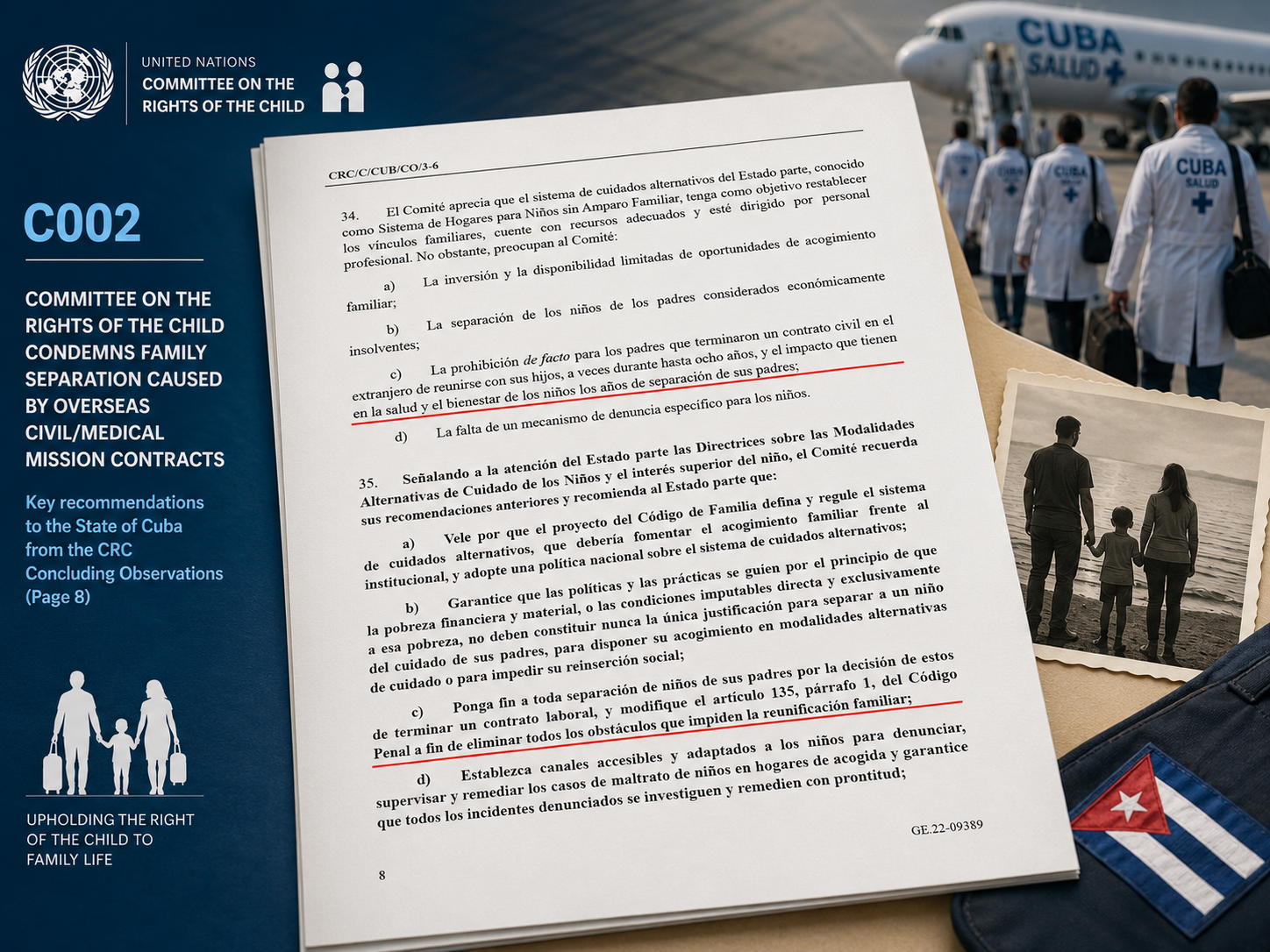
Comité de los Derechos del Niño
Concluding observations of the Committee on the Rights of the Child on Cuba (paras. 34(c) and 35(c))
In its concluding observations adopted on 3 June 2022, the Committee on the Rights of the Child expressed concern at the de facto ban that prevents Cuban parents who leave civil contracts abroad from reuniting with their children for long periods, sometimes up to eight years. The Committee recommended ending any separation of children from their parents resulting from the termination of an overseas labour contract and amending criminal and migration rules that obstruct family reunification. It is one of the clearest UN pronouncements on the impact of these missions on family life.
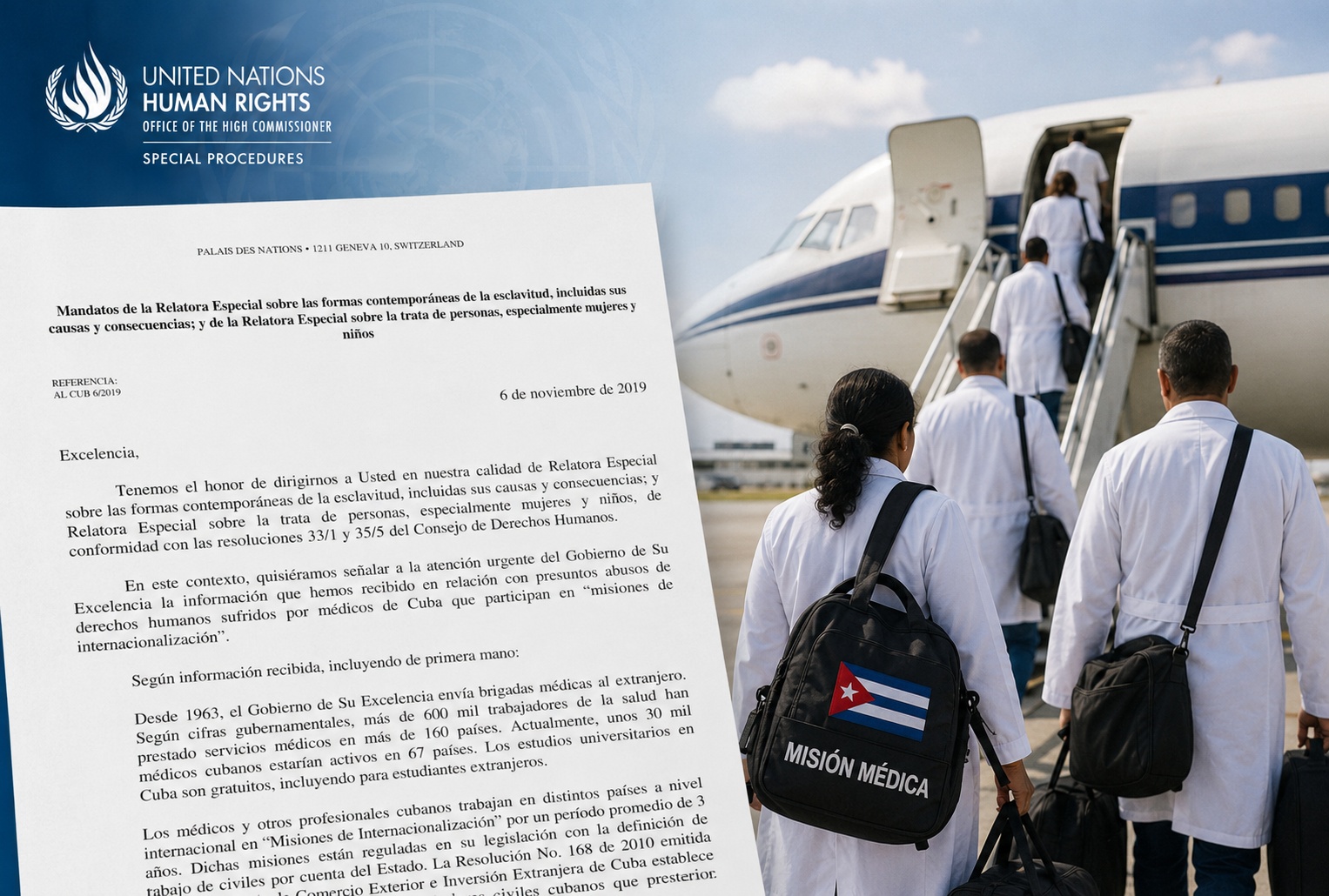
Naciones Unidas / Procedimientos Especiales
Communication AL CUB 6/2019 on alleged abuses in Cuba’s international missions
On 6 November 2019, the Special Rapporteur on contemporary forms of slavery and the Special Rapporteur on trafficking in persons sent communication AL CUB 6/2019 to the Cuban State. The document summarizes allegations of wage confiscation, restrictions on freedom of movement and expression, surveillance, excessive working hours, criminal penalties for “desertion,” and family separation. While acknowledging the medical value of Cuba’s cooperation programs, the UN formally raised concern that several features of the missions system could amount to forced labour and other human-rights violations.
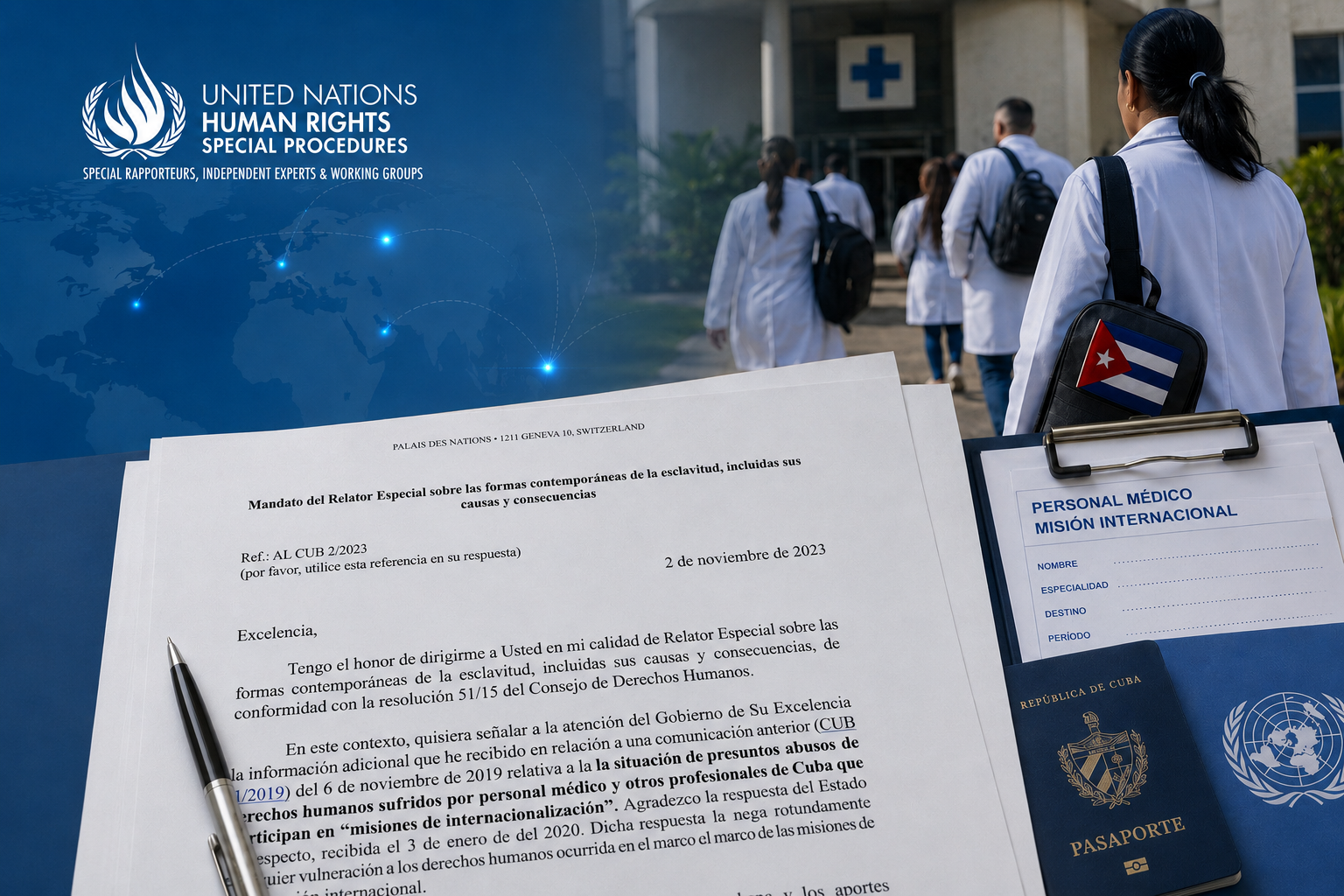
Naciones Unidas / Procedimientos Especiales
Communication AL CUB 2/2023: UN follow-up on Cuba’s international missions
On 2 November 2023, the UN Special Rapporteur on contemporary forms of slavery sent communication AL CUB 2/2023 as a follow-up to the 2019 letter. The Rapporteur said that allegations of wage withholding, violations of privacy, and restrictions on freedom of expression, association, and movement of Cuban professionals in temporary overseas missions persisted. He also broadened the concern beyond the health sector to other professions exported by the Cuban State and warned of possible responsibility on the part of contracting entities in third countries.
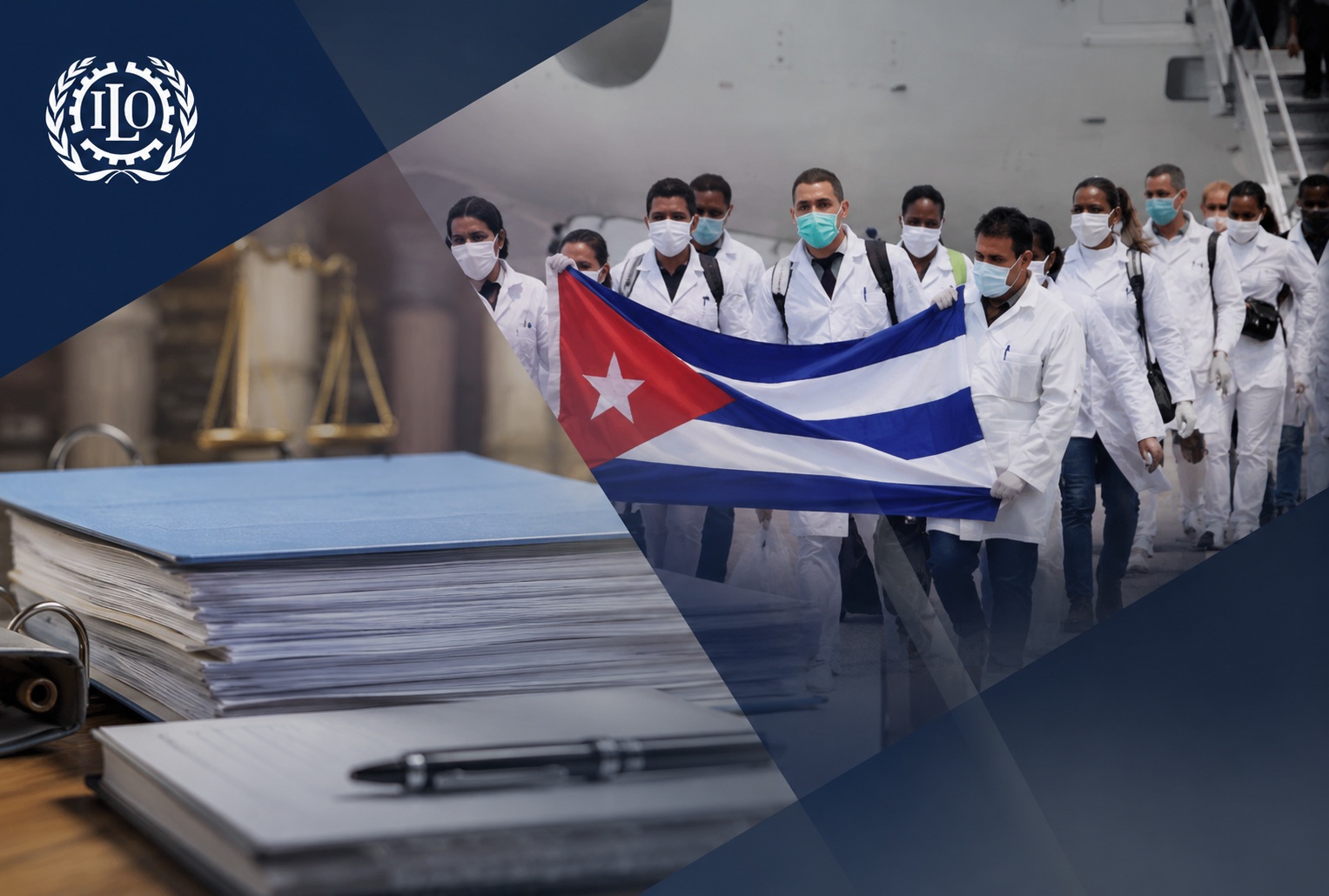
OIT / CEACR
CEACR comment on Cuba under Convention No. 29 (forced labour)
In its 2024 comment on Cuba’s application of ILO Convention No. 29, the Committee of Experts took note of observations received, especially concerning Cuban doctors participating in international medical missions. The comment connects the review of Cuba with allegations of forced labour, wage withholding, and State coercion, placing the issue within the ILO supervisory framework. While it is not a judicial ruling, it is a significant technical pronouncement by one of the most authoritative specialized bodies in international labour law.
CIDH
IACHR report “Labor and Trade Union Rights in Cuba”
Approved on 5 April 2023, this report by the Inter-American Commission on Human Rights devotes several sections to working conditions imposed by the Cuban State, including references to health workers sent abroad. The text examines the lack of trade-union freedom, restrictions on collective bargaining, State coercion, and harm to core labour rights. Although it is not limited to the medical brigades, the report provides a regional framework for understanding the missions as part of a broader pattern of State control over labour and violations of labour and trade-union rights in Cuba.
CIDH y REDESCA
IACHR and SRESCER questionnaire on Cuban healthcare workers in international missions
The IACHR and its Special Rapporteurship on Economic, Social, Cultural and Environmental Rights opened a public questionnaire to prepare a thematic report on Cuban healthcare workers in internationalization missions. This initiative shows that the Inter-American system considered the allegations sufficiently grounded to launch a formal evidence-gathering process. The questionnaire defines the issues of interest—working conditions, freedom of movement, wages, privacy, trade-union freedom, sanctions, and family impact—and became the immediate prelude to the 2026 report.
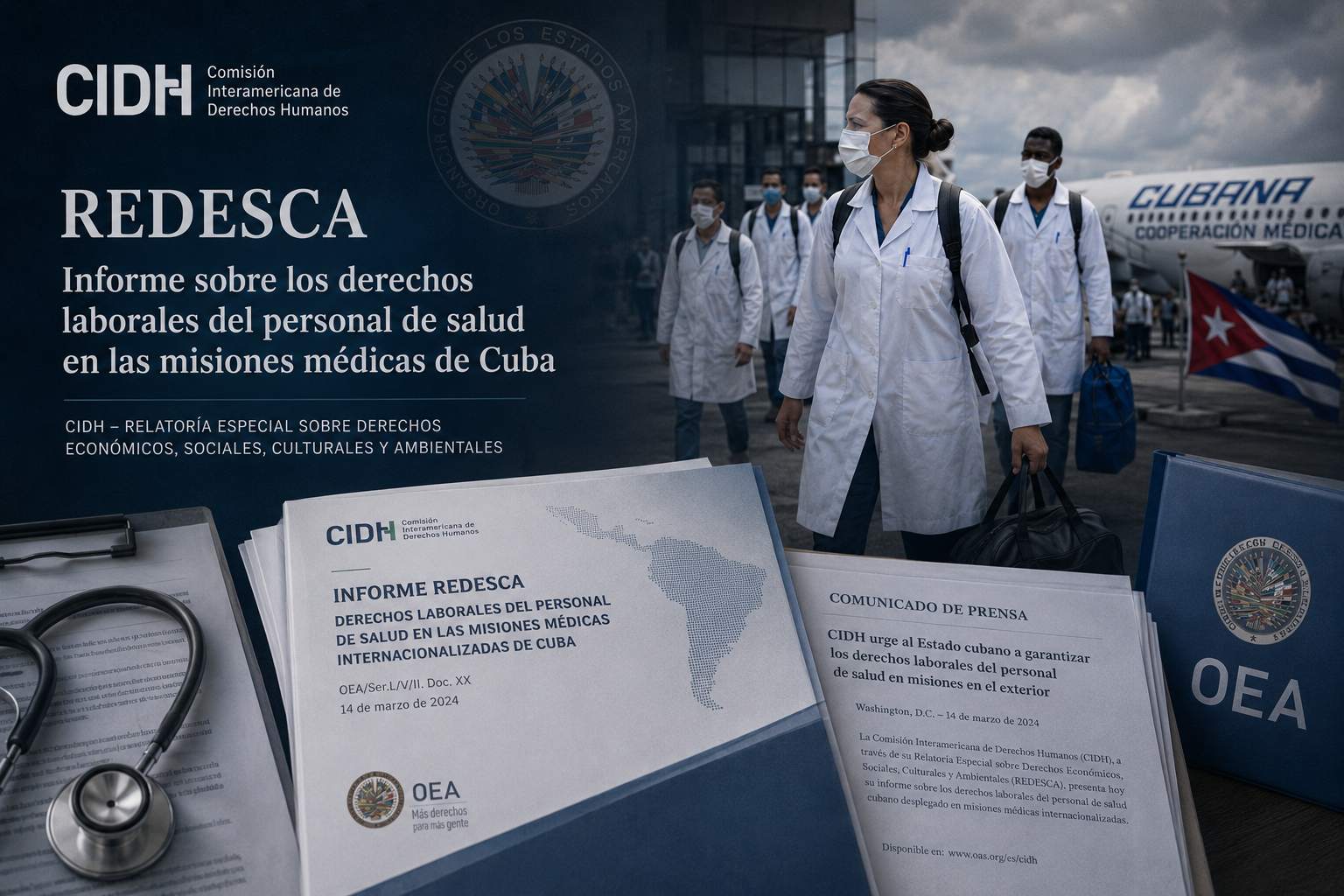
CIDH y REDESCA
IACHR and SRESCER report on the labour rights of healthcare personnel in Cuba’s medical missions
Published on 7 April 2026, this thematic report is one of the most comprehensive official documents on Cuba’s medical missions. The IACHR and SRESCER analyze how the overseas missions operate, the labour conditions of participating personnel, the lack of contractual transparency, restrictions on fundamental rights, and State responsibility. The report systematizes allegations received over several years, sets out the applicable standards, and places the issue within the Inter-American human-rights framework, making it a first-order reference for regional and international debate.
Parlamento Europeo
European Parliament resolution of 10 June 2021 on the human-rights and political situation in Cuba
In this resolution, the European Parliament expressly condemned the systematic violations of labour and human rights committed by the Cuban State against healthcare personnel deployed abroad. The text links the missions to ILO Conventions 29 and 105, calls on Cuba to guarantee doctors’ right to leave and re-enter the country, and underlines that the conditions imposed by Resolution 168/2010 and by the Cuban Criminal Code violate dignity and fundamental rights. It is one of the strongest parliamentary pronouncements issued in Europe on this matter.
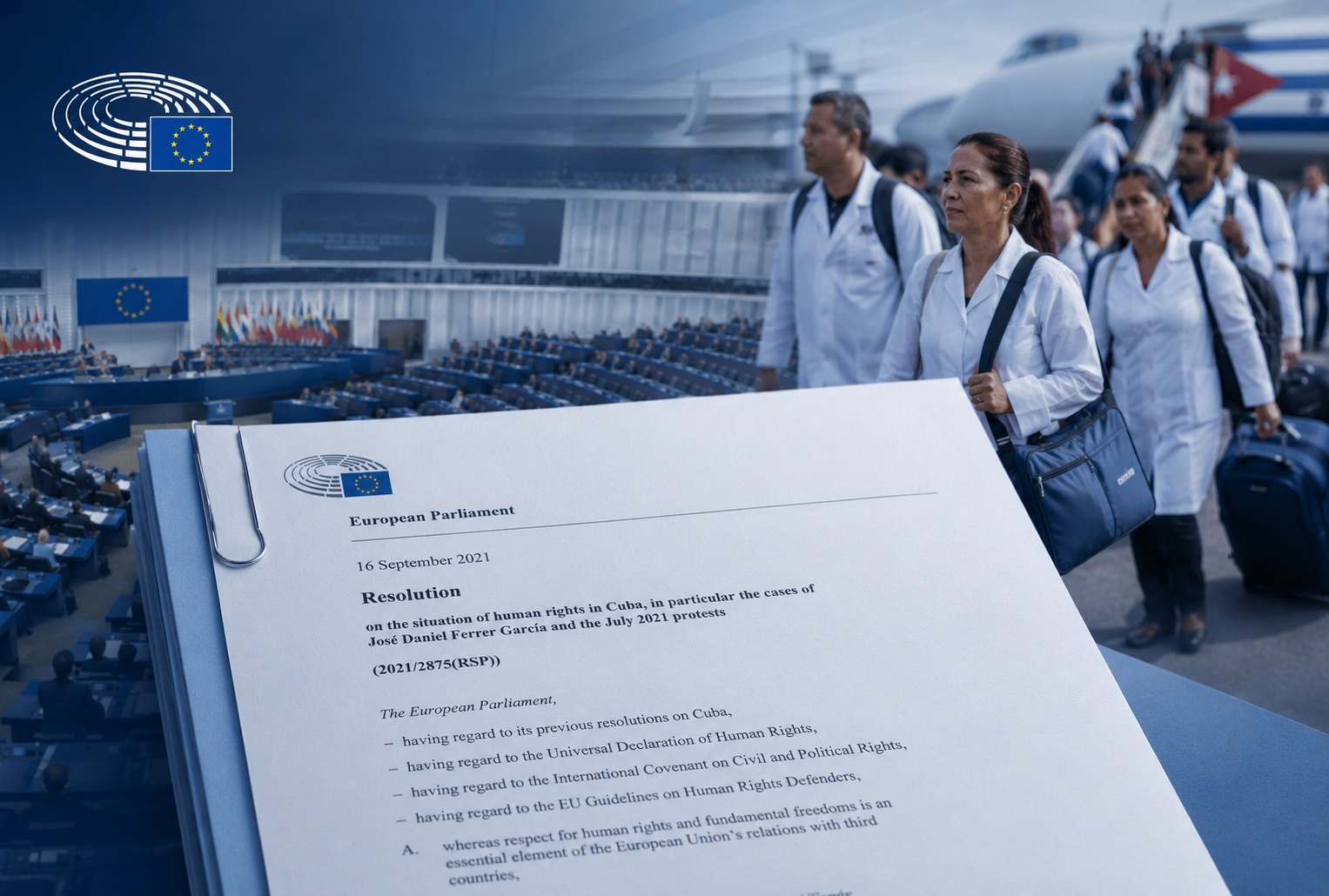
Parlamento Europeo
European Parliament resolution of 16 September 2021 on repression and human-rights defenders in Cuba
The resolution adopted on 16 September 2021 reiterates the European Parliament’s concern about rights violations associated with Cuba’s medical missions. In its recitals, the text recalls that the Cuban State continues systematically to violate the labour and human rights of healthcare personnel deployed abroad and links this situation to the notion of modern slavery. Although the resolution’s main focus is domestic political repression, Parliament again incorporated the missions as a structural example of the Cuban regime’s pattern of abuse.
Parlamento Europeo
European Parliament resolution of 12 July 2023 on Cuba
The 12 July 2023 resolution again incorporated Cuba’s medical missions into the European Parliament’s catalogue of concerns. The text expressly refers to the UN communication of 6 November 2019 and to the conclusions of the Universal Periodic Review, confirming that the issue had become a regular part of the European Parliament’s monitoring of Cuba. Although the document is broader and focuses on civil liberties, political prisoners, and EU-Cuba relations, its importance lies in formally reiterating that the medical brigades raise serious human-rights concerns.
Parlamento Europeo
European Parliament resolution of 29 February 2024 on the critical situation in Cuba
The 29 February 2024 resolution is one of the European Parliament’s most direct pronouncements on Cuba’s medical brigades. Among its references, it cites reports by Human Rights Watch, Human Rights Foundation, Prisoners Defenders, the IACHR, and the 2019 UN communication. The text explicitly presents the missions as a form of modern slavery and forced labour and incorporates them into the broader description of the deterioration of human rights in Cuba. Its political relevance is high because it consolidates and hardens the line maintained by Parliament since 2021.
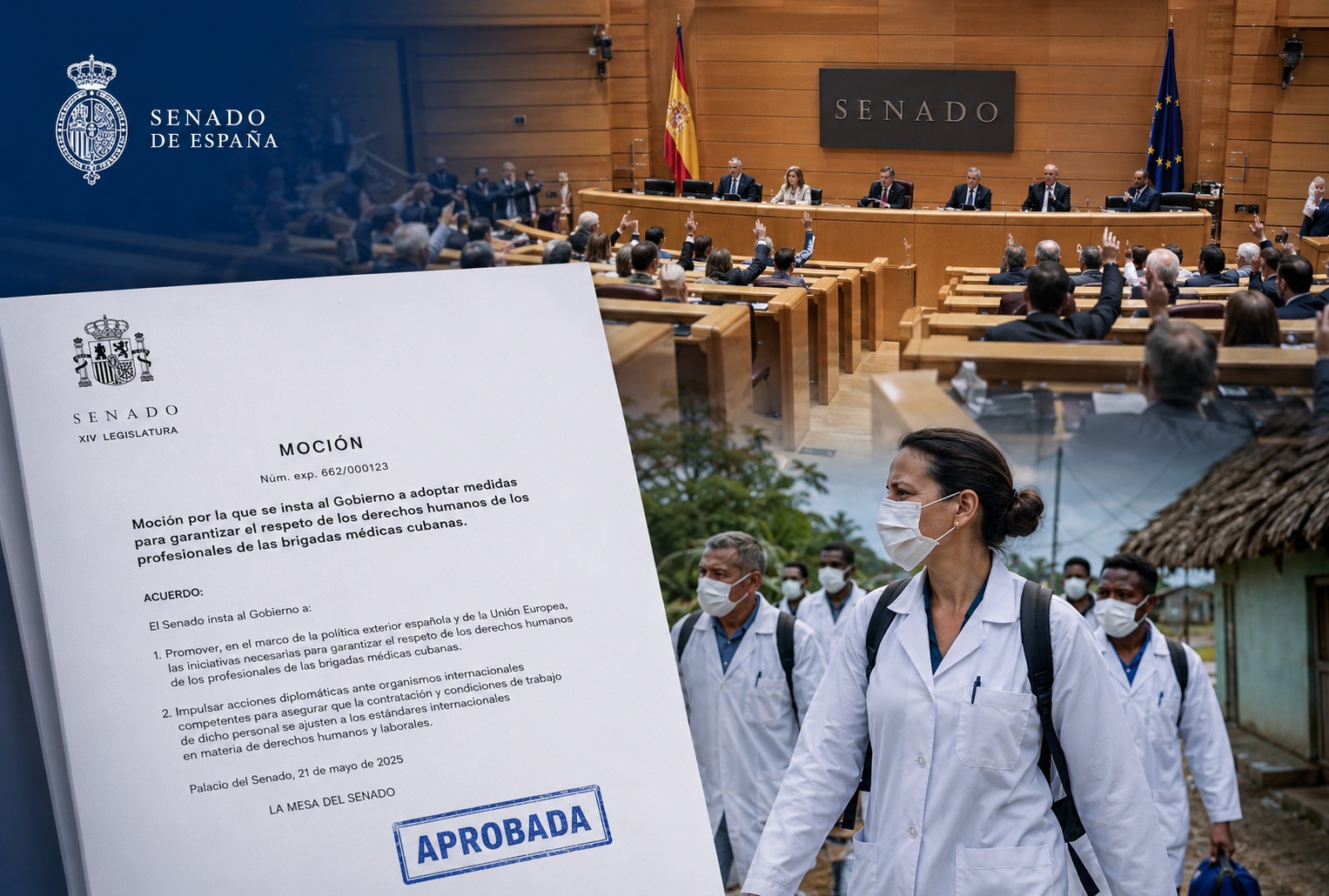
Senado de España
Motion approved by the Spanish Senate’s Ibero-American Affairs Committee on Cuban medical brigades
On 7 April 2026, the Senate’s Ibero-American Affairs Committee approved a motion strongly condemning the Cuban regime’s forced deployment of healthcare professionals in medical brigades, describing it as a form of labour exploitation and forced labour incompatible with international law. The Senate’s official communication, dated 16 April, also urges the Spanish Government to audit any projects financed with Spanish funds in which Cuban entities linked to those brigades participate and to suspend them if abusive practices are detected. It is one of the strongest State-level European pronouncements on the issue.
Senado Federal de Brasil
Brazilian Senate information request on rights violations and slave labour in Cuban medical missions
In 2025, Brazil’s Senate registered a formal request for information on alleged human-rights violations and slave or slavery-like labour in Cuban medical missions. This kind of action is not merely declaratory: it is a parliamentary oversight instrument aimed at gathering official information and triggering political accountability. Its relevance lies in turning allegations about Cuban medical brigades into a subject of legislative control by one of the institutions of the country that was a central stage for the Mais Médicos program.
Departamento de Estado de EE. UU.
Trafficking in Persons Report (2020) – Cuba section
The 2020 edition of the U.S. Department of State’s Trafficking in Persons Report included Cuba among the countries scrutinized for the use of labour-export programs, especially medical missions abroad, under conditions raising concerns of forced labour and exploitation. These reports matter because they are annual, public, and systematic governmental assessments summarizing indicators, trends, and State policies. Over the years, the TIP Report has consolidated a consistent line according to which Cuba’s medical missions may involve coercion, wage withholding, surveillance, and severe restrictions on fundamental rights.
Departamento de Estado de EE. UU.
Trafficking in Persons Report (2021) – Cuba section
The 2021 edition of the U.S. Department of State’s Trafficking in Persons Report included Cuba among the countries scrutinized for the use of labour-export programs, especially medical missions abroad, under conditions raising concerns of forced labour and exploitation. These reports matter because they are annual, public, and systematic governmental assessments summarizing indicators, trends, and State policies. Over the years, the TIP Report has consolidated a consistent line according to which Cuba’s medical missions may involve coercion, wage withholding, surveillance, and severe restrictions on fundamental rights.
Departamento de Estado de EE. UU.
Trafficking in Persons Report (2022) – Cuba section
The 2022 edition of the U.S. Department of State’s Trafficking in Persons Report included Cuba among the countries scrutinized for the use of labour-export programs, especially medical missions abroad, under conditions raising concerns of forced labour and exploitation. These reports matter because they are annual, public, and systematic governmental assessments summarizing indicators, trends, and State policies. Over the years, the TIP Report has consolidated a consistent line according to which Cuba’s medical missions may involve coercion, wage withholding, surveillance, and severe restrictions on fundamental rights.
Departamento de Estado de EE. UU.
Trafficking in Persons Report (2023) – Cuba section
The 2023 edition of the U.S. Department of State’s Trafficking in Persons Report included Cuba among the countries scrutinized for the use of labour-export programs, especially medical missions abroad, under conditions raising concerns of forced labour and exploitation. These reports matter because they are annual, public, and systematic governmental assessments summarizing indicators, trends, and State policies. Over the years, the TIP Report has consolidated a consistent line according to which Cuba’s medical missions may involve coercion, wage withholding, surveillance, and severe restrictions on fundamental rights.
Departamento de Estado de EE. UU.
Trafficking in Persons Report (2024) – Cuba section
The 2024 edition of the U.S. Department of State’s Trafficking in Persons Report included Cuba among the countries scrutinized for the use of labour-export programs, especially medical missions abroad, under conditions raising concerns of forced labour and exploitation. These reports matter because they are annual, public, and systematic governmental assessments summarizing indicators, trends, and State policies. Over the years, the TIP Report has consolidated a consistent line according to which Cuba’s medical missions may involve coercion, wage withholding, surveillance, and severe restrictions on fundamental rights.
Departamento de Estado de EE. UU.
Trafficking in Persons Report (2025) – Cuba section
The 2025 edition of the U.S. Department of State’s Trafficking in Persons Report included Cuba among the countries scrutinized for the use of labour-export programs, especially medical missions abroad, under conditions raising concerns of forced labour and exploitation. These reports matter because they are annual, public, and systematic governmental assessments summarizing indicators, trends, and State policies. Over the years, the TIP Report has consolidated a consistent line according to which Cuba’s medical missions may involve coercion, wage withholding, surveillance, and severe restrictions on fundamental rights.
Departamento de Estado de EE. UU.
State Department fact sheet on trafficking in persons and Cuba’s labour export program
This thematic fact sheet from the U.S. Department of State summarizes the official U.S. position on Cuba’s labour-export program and explains why medical missions and other overseas work schemes are considered high-risk in terms of trafficking and forced labour. Its value lies not only in its policy assessment, but also in its systematization of concrete elements: wage confiscation, movement restrictions, surveillance, threats, document retention, and reprisals for leaving a mission. It serves as a government reference document and complements the annual findings of the TIP Report.
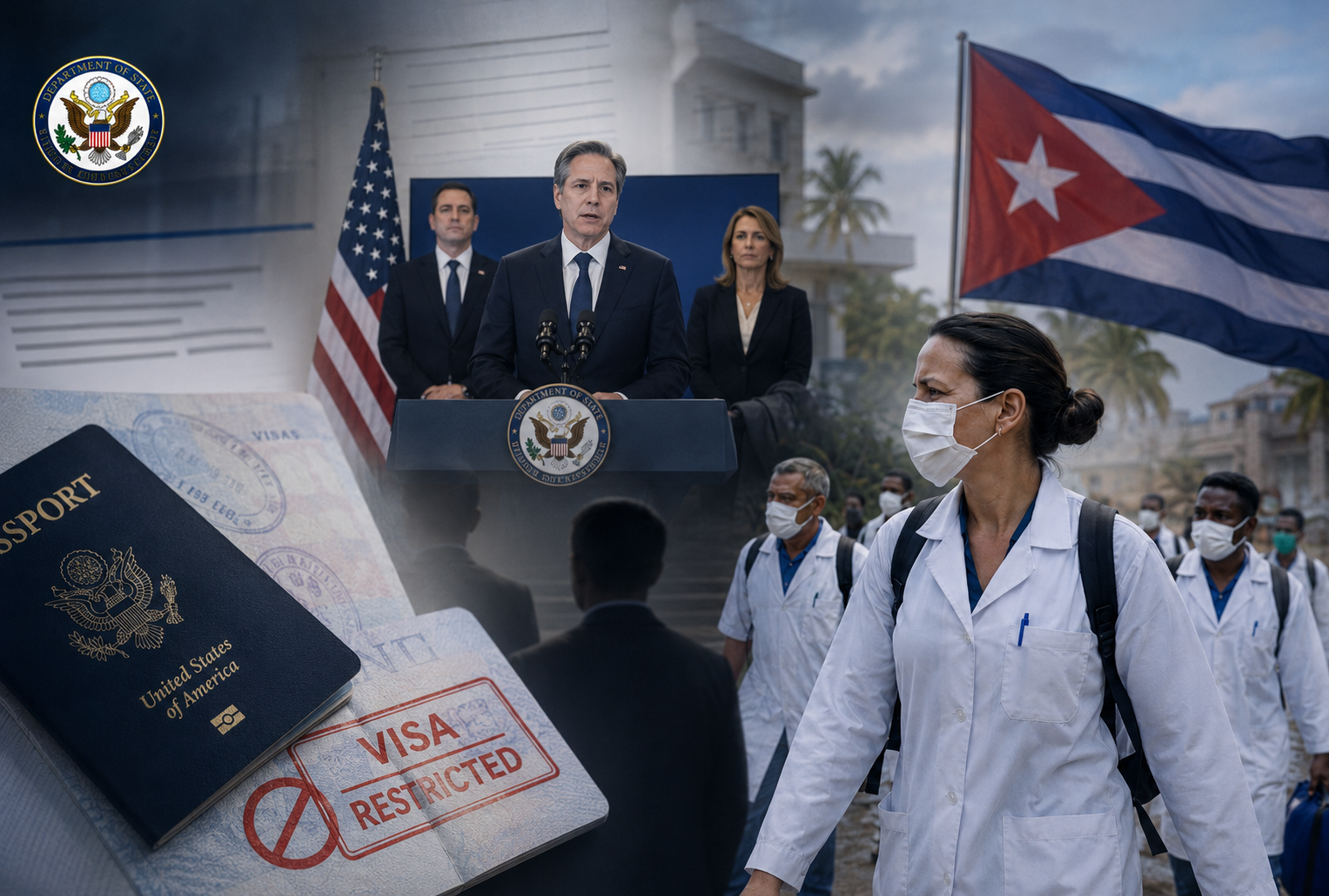
Departamento de Estado de EE. UU.
Imposition of visa restrictions for involvement in the Cuban labour export program
On 25 February 2025, the Department of State announced visa restrictions on Central American government officials and their immediate family members for responsibility for or involvement in the Cuban labour export program. The statement is particularly important because it moves the issue from description into the realm of concrete diplomatic consequences. It also identifies participation in the program as sanctionable conduct and reinforces the view that third States may incur political responsibility when they facilitate or benefit from schemes involving forced labour or exploitation of Cuban personnel.
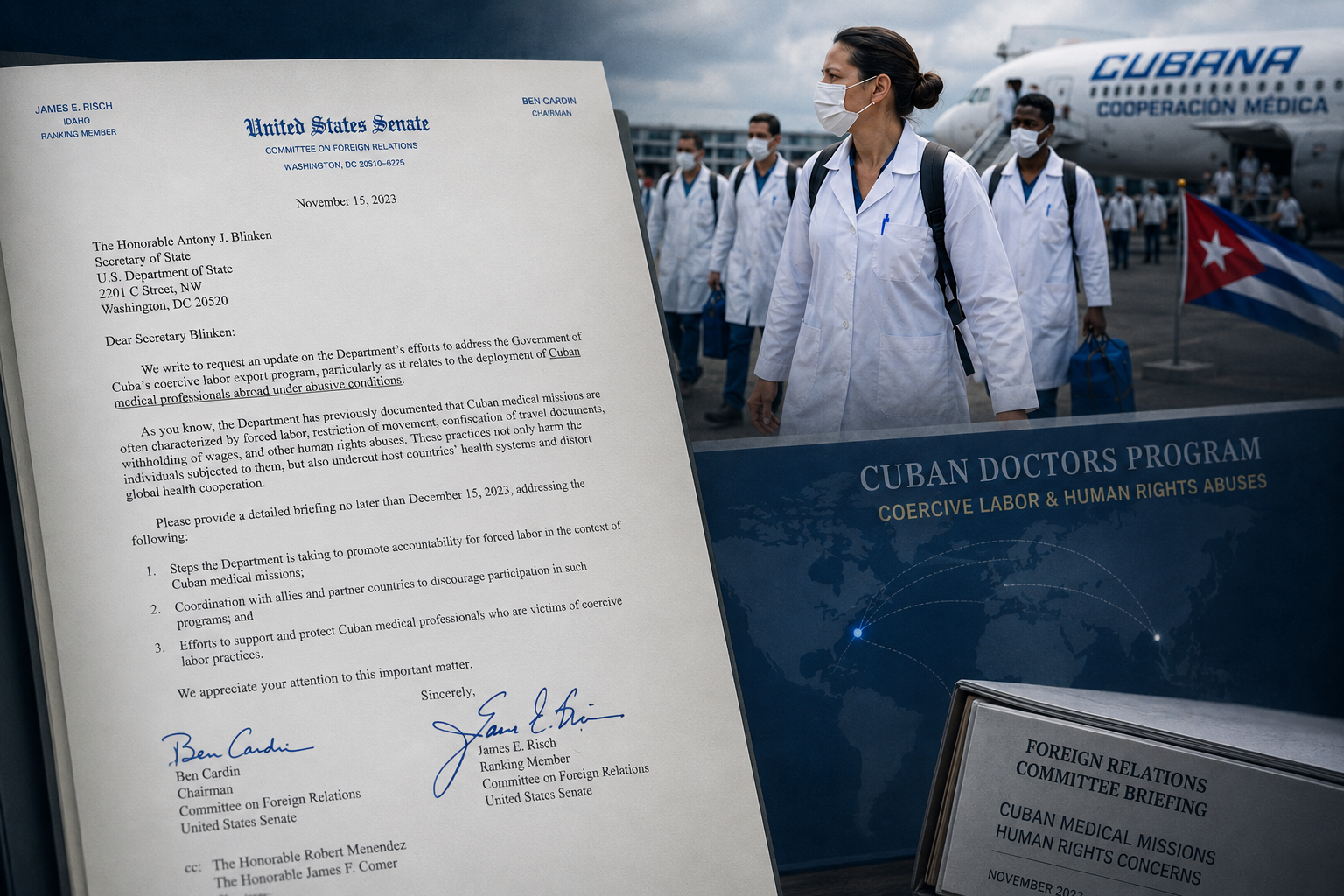
Senado de EE. UU.
Rubio and Menendez introduce the Combating Trafficking of Cuban Doctors Act
The introduction in the U.S. Senate of the Combating Trafficking of Cuban Doctors Act was a formal legislative pronouncement aimed at recognizing and sanctioning the exploitation of Cuban medical personnel deployed abroad. The bill rested on the view that the medical missions operated as a trafficking or forced-labour scheme sponsored by the Cuban State and that foreign officials collaborating with it should face consequences. Although its ultimate legal impact depends on the legislative process, the bill marked a political turning point in the U.S. Congress’s agenda on this issue.
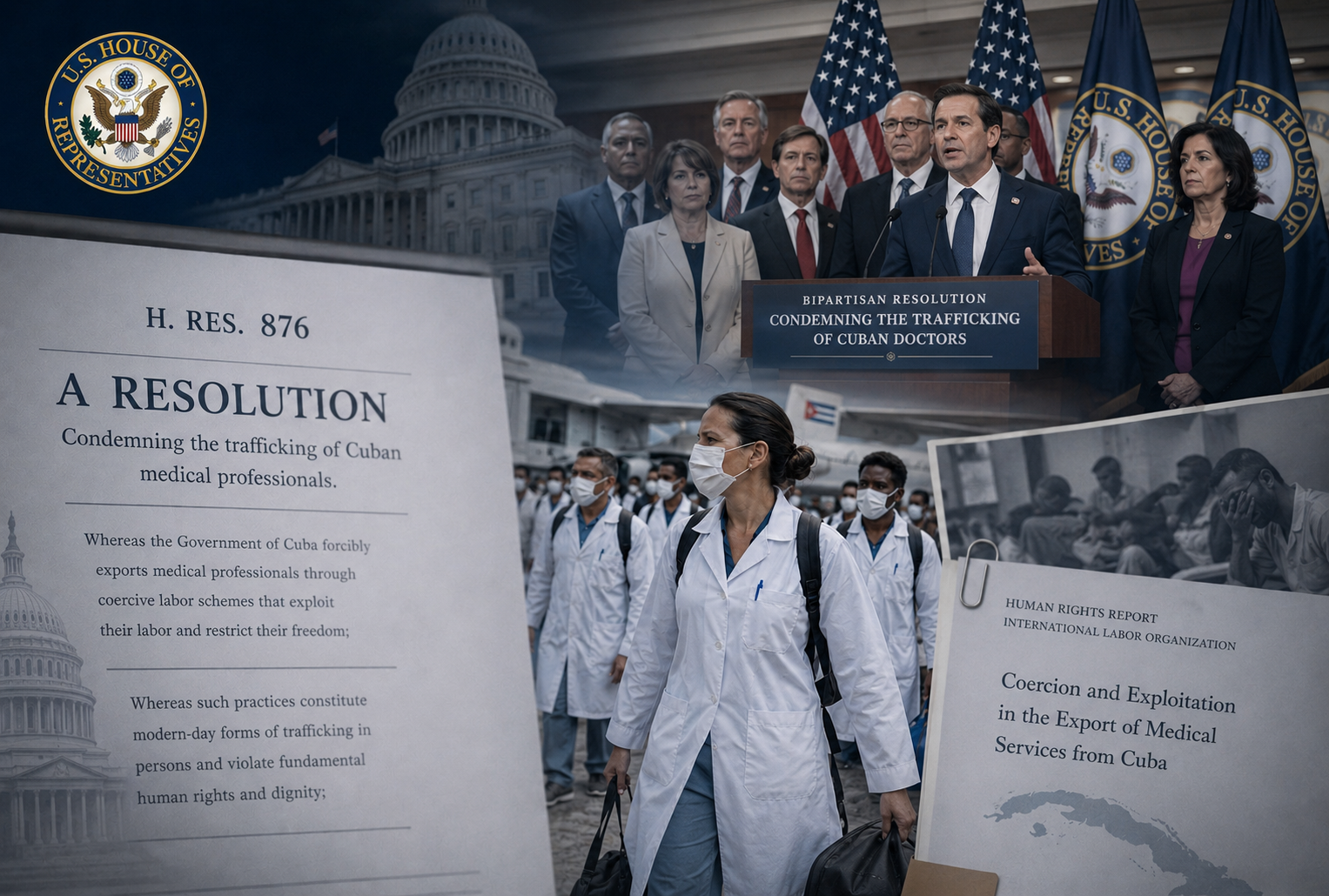
Cámara de Representantes de EE. UU.
Bipartisan House resolution denouncing the trafficking of Cuban doctors
In July 2024, Representative María Elvira Salazar announced a bipartisan House resolution denouncing modern slavery and the exploitation of Cuban medical personnel deployed in various countries. The resolution embraces the view that the medical missions constitute a scheme of servitude and trafficking, supported by findings from the Department of State. Although it is a political pronouncement rather than an executive measure, its importance lies in the breadth of bipartisan support and in its proposal of concrete responses toward States and officials that benefit from the system.
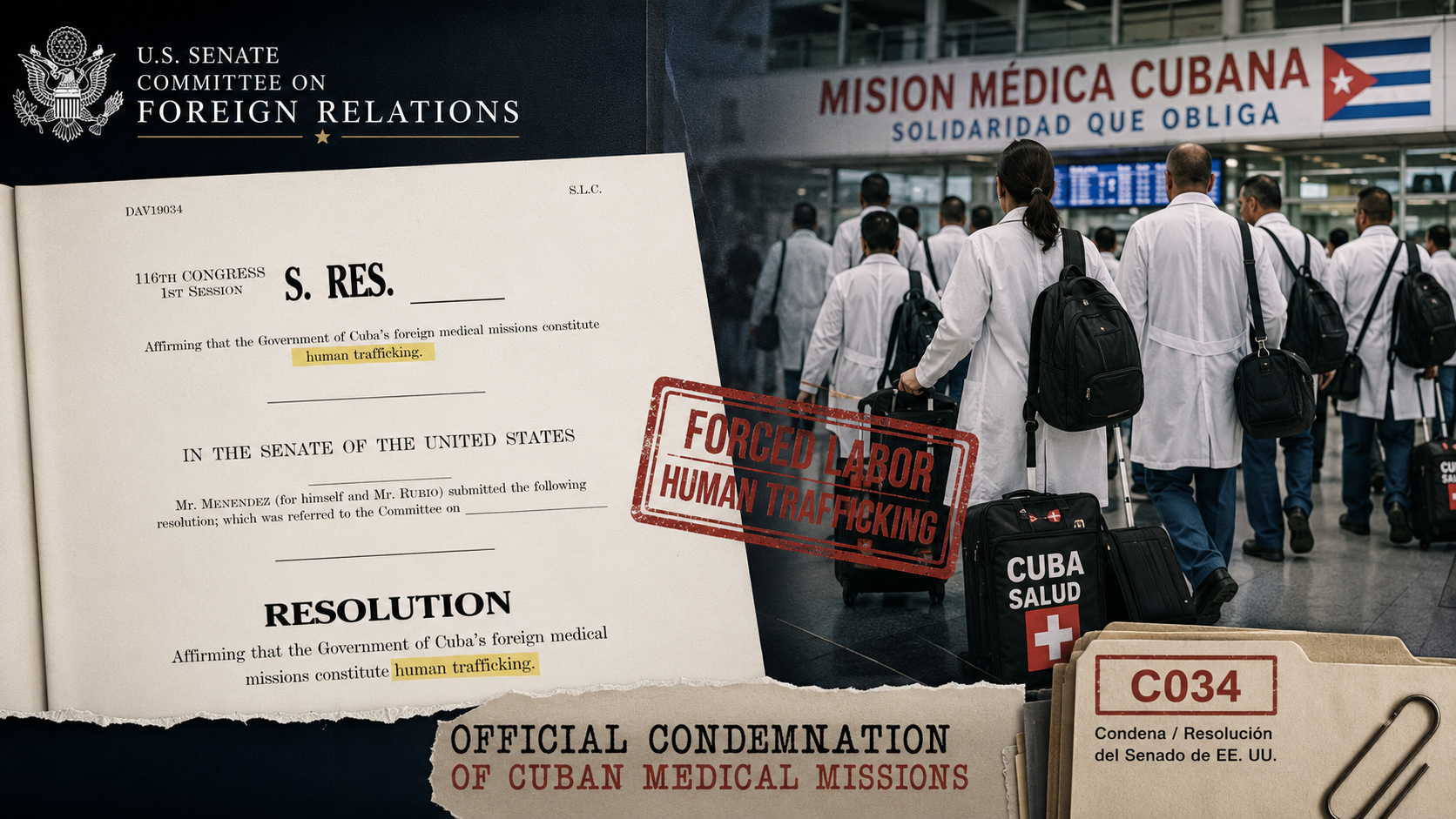
Senado de EE. UU.
Senators Menendez, Rubio Introduce Senate Resolution Condemning Castro Regime’s Forced Labor of Cuban Doctors
The U.S. Senate resolution, introduced by Senators Bob Menendez and Marco Rubio, formally condemns Cuba’s international medical missions by classifying them as a state-sponsored scheme of human trafficking and forced labor. The resolution demands that the Cuban regime fully compensate the affected doctors for all wages confiscated during the Brazilian Mais Médicos program. In addition, it warns other foreign governments of the legal risks of contracting these exploitative labor services and urges the Pan American Health Organization (PAHO) to provide immediate transparency regarding its role and financial intermediation.
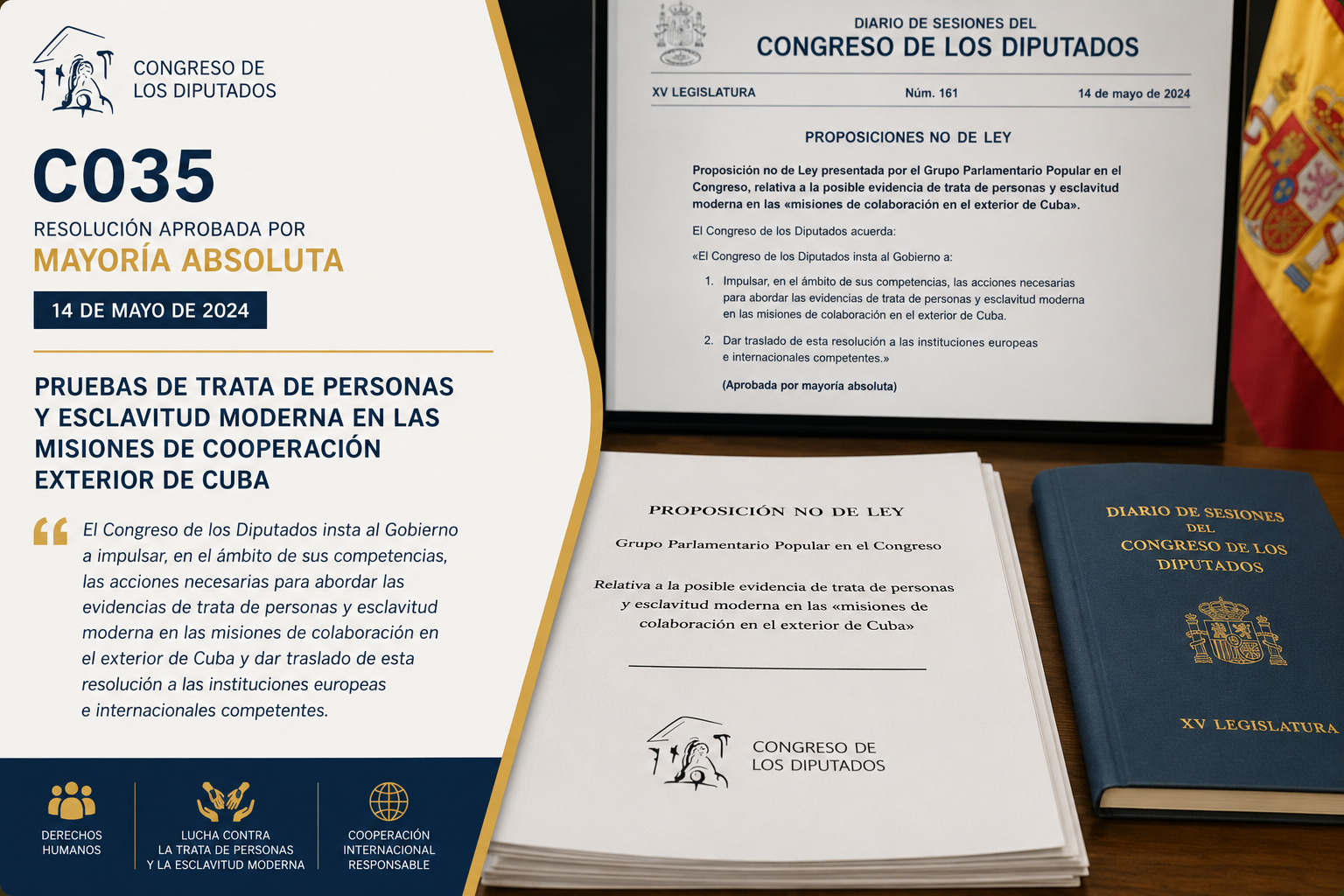
Congreso de España
Ruling against slavery
In 2024, the Congress of Deputies approved a non-binding resolution proposed by the Popular Group condemning Cuba’s overseas missions, characterizing them as human trafficking and modern slavery. Based on UN reports, the resolution presents a complaint that the Cuban regime withholds nearly all of these professionals’ salaries, restricts their freedoms, and coerces them through threats. The text demands an end to repression and the liberation of political prisoners; it passed despite opposition from the Socialist Party.
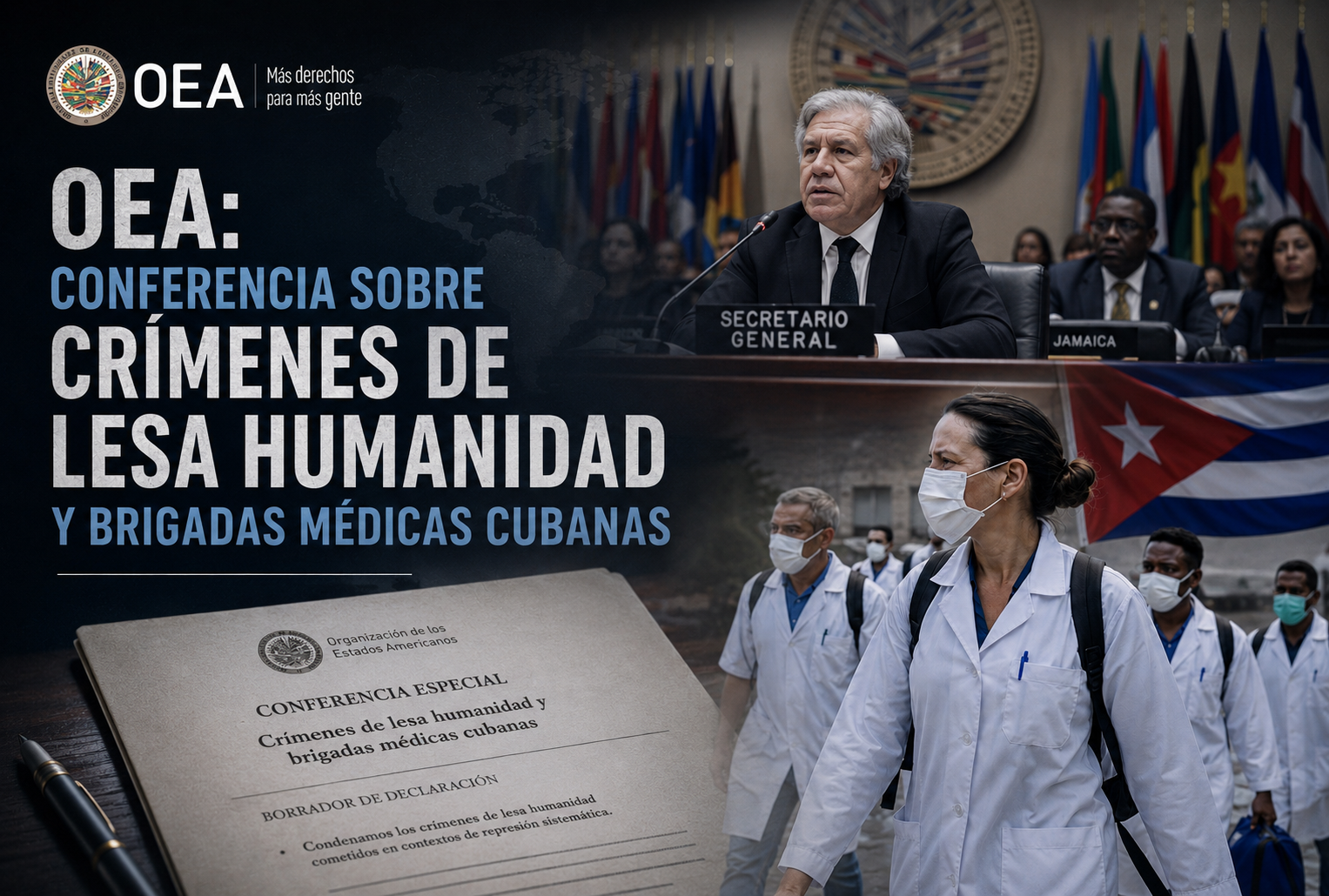
Secretaría General de la OEA
OAS conference on crimes against humanity and Cuban medical brigades
The OAS General Secretariat hosted a conference on crimes against humanity in Cuba and the use of medical brigades. Secretary General Luis Almagro referred to trafficking, human smuggling, and human-rights violations hidden under “medical brigades,” portrayed as a source of income and a political instrument of the Cuban regime. The event gave regional institutional visibility to allegations of slavery, persecution, and other inhuman acts involving Cuban workers sent abroad.
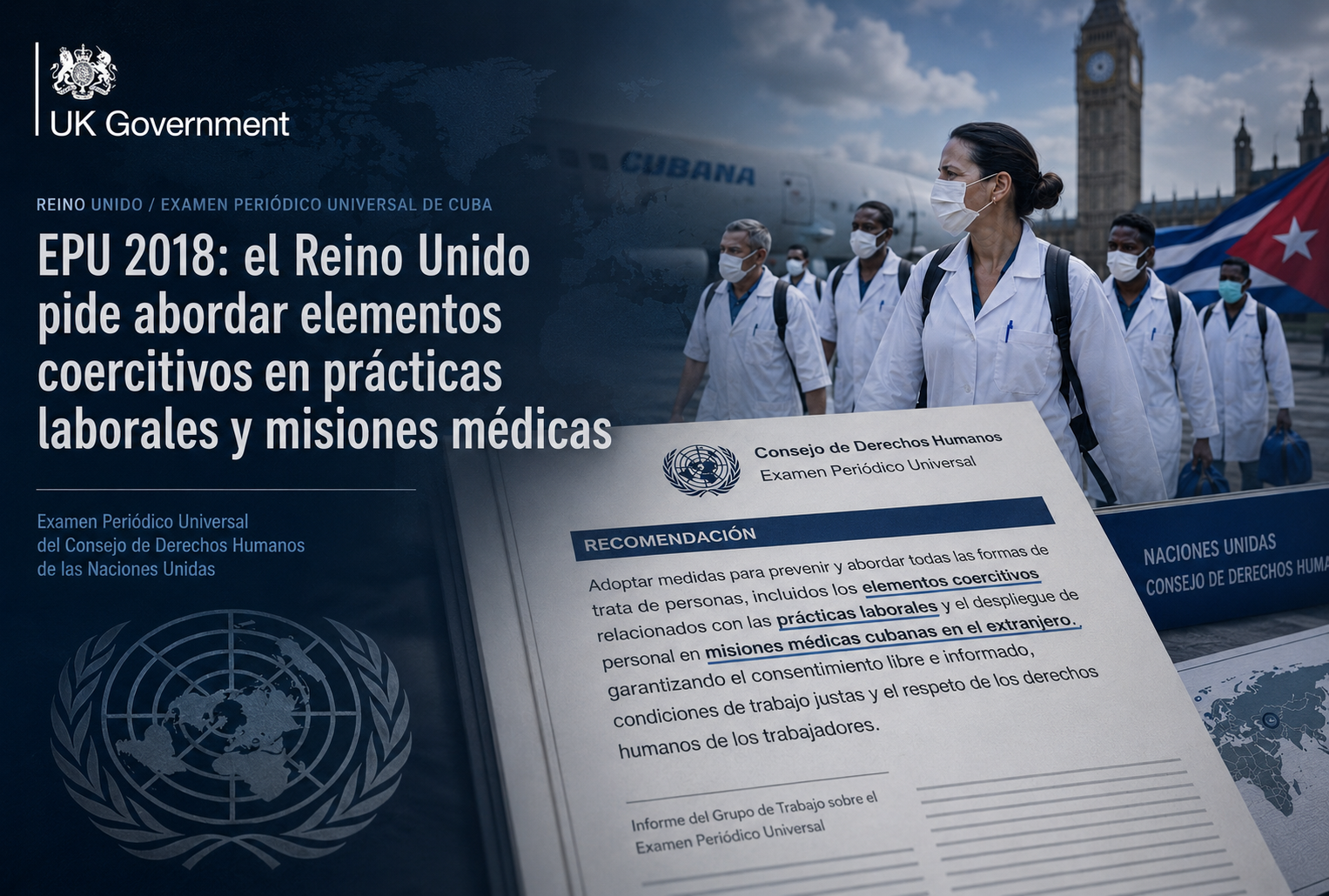
Reino Unido / Examen Periódico Universal de Cuba
2018 UPR: United Kingdom urges Cuba to address coercive elements in labour practices and medical missions
During Cuba’s third Universal Periodic Review cycle, the United Kingdom recommended criminalizing all forms of trafficking in line with the Palermo Protocols and addressing reportedly coercive elements of Cuban labour practices and foreign medical missions. The recommendation matters because it placed the issue within the UN universal review mechanism before later Special Procedures letters, NGO reports, and parliamentary resolutions focused on forced labour and trafficking.
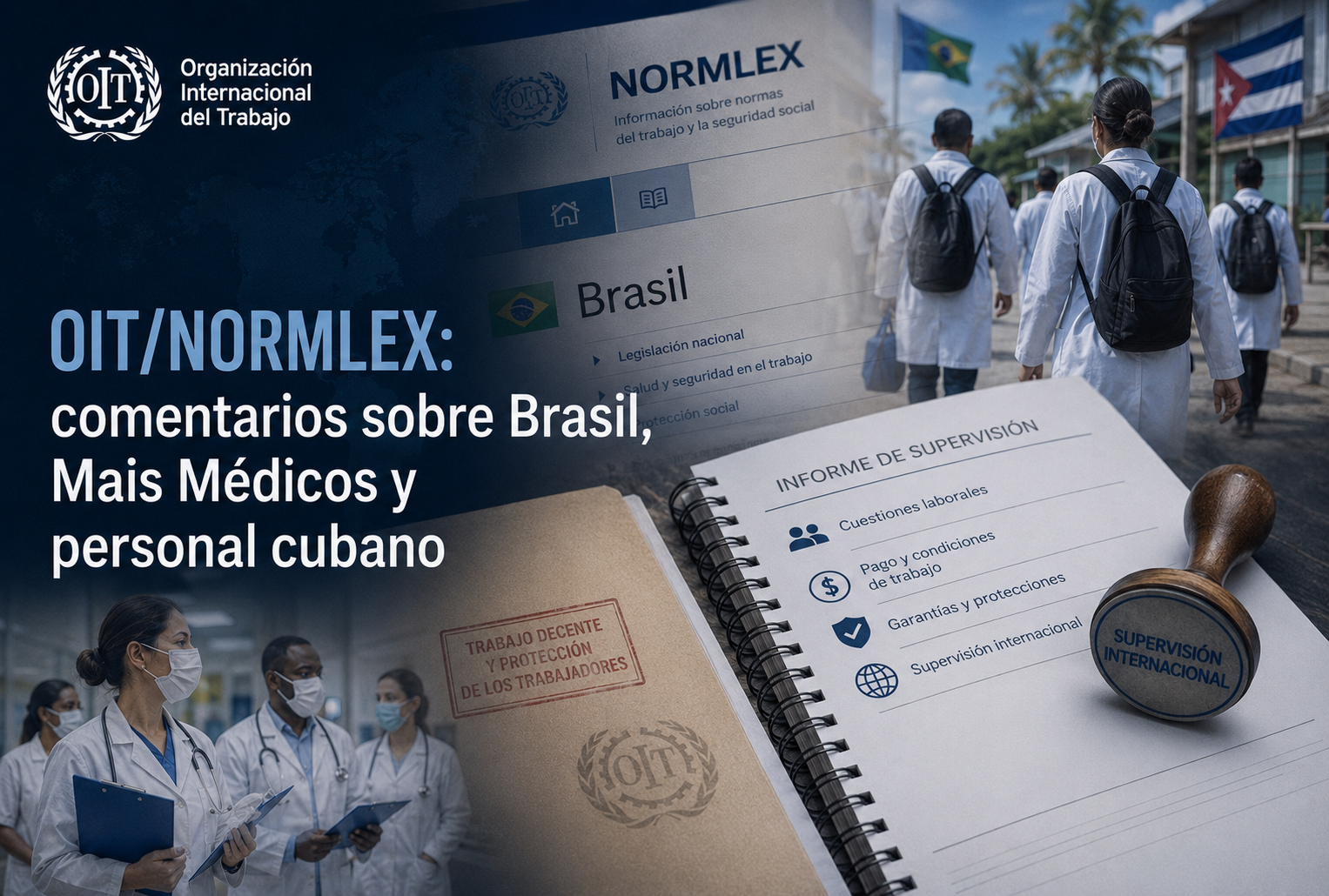
OIT / NORMLEX sobre Brasil
ILO/NORMLEX comments on Brazil, Mais Médicos, and Cuban personnel
NORMLEX records ILO comments on Cuban doctors and health workers in Brazil under the Mais Médicos program and the cooperation agreement with Cuba. The mechanism examined government information and concerns over working conditions, payments, and protection. Although Brazil maintained that the program did not amount to forced labour, the record is relevant because the ILO supervisory system explicitly addressed Cuban professionals in a host country and requested information on conditions and safeguards.
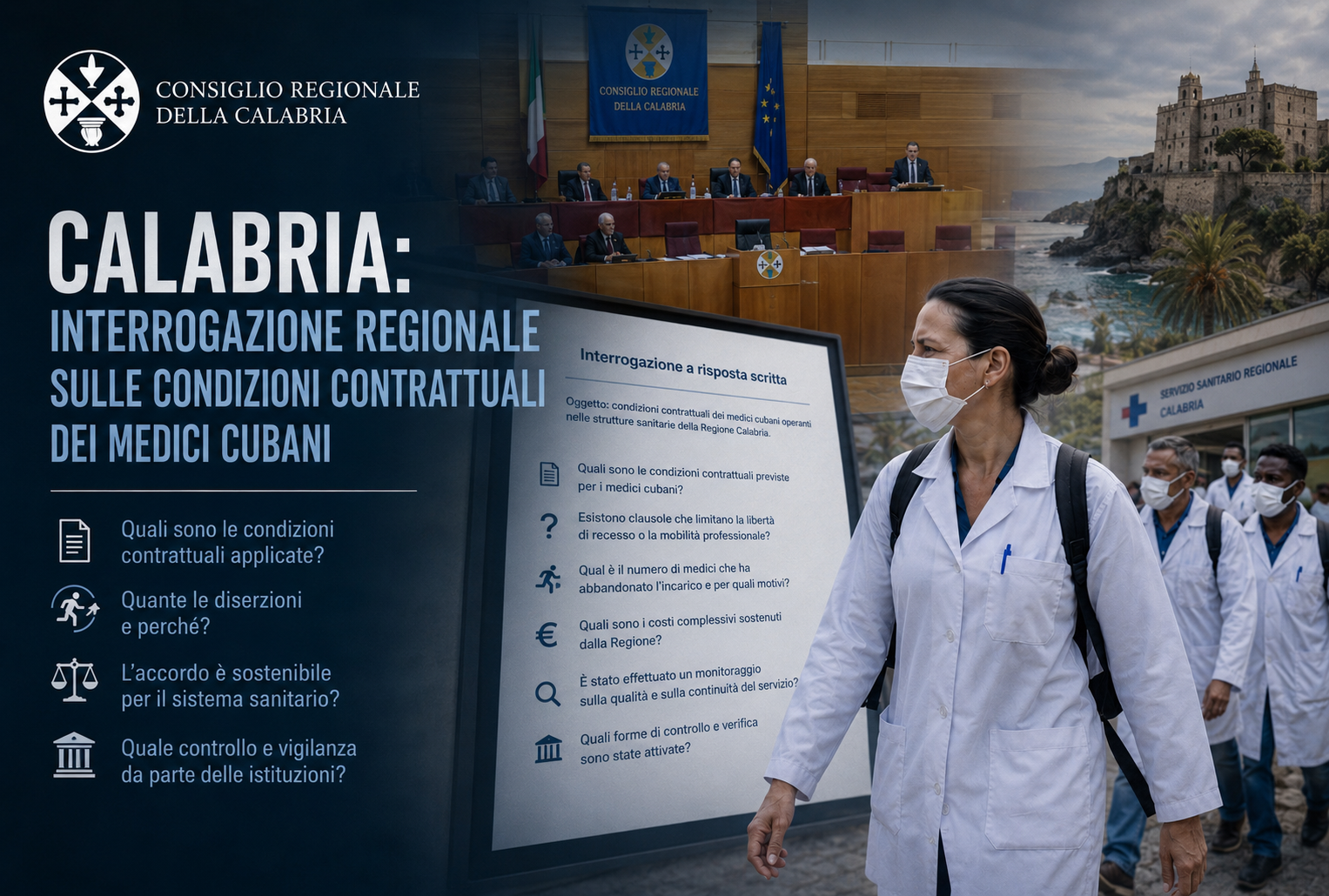
Consejo Regional de Calabria
Calabria regional inquiry into Cuban doctors’ contractual conditions
In Calabria, regional councillor Ernesto Alecci filed an inquiry on the health cooperation project involving Cuban doctors. He asked how many remained in service, how many had left, what monitoring measures existed, and whether the Region would review or renegotiate contractual conditions with the Cuban company. The initiative followed criticism over effective pay, departures, and the agreement’s sustainability. Although not a formal slavery condemnation, it is a European parliamentary oversight act concerning Cuban workers sent abroad.
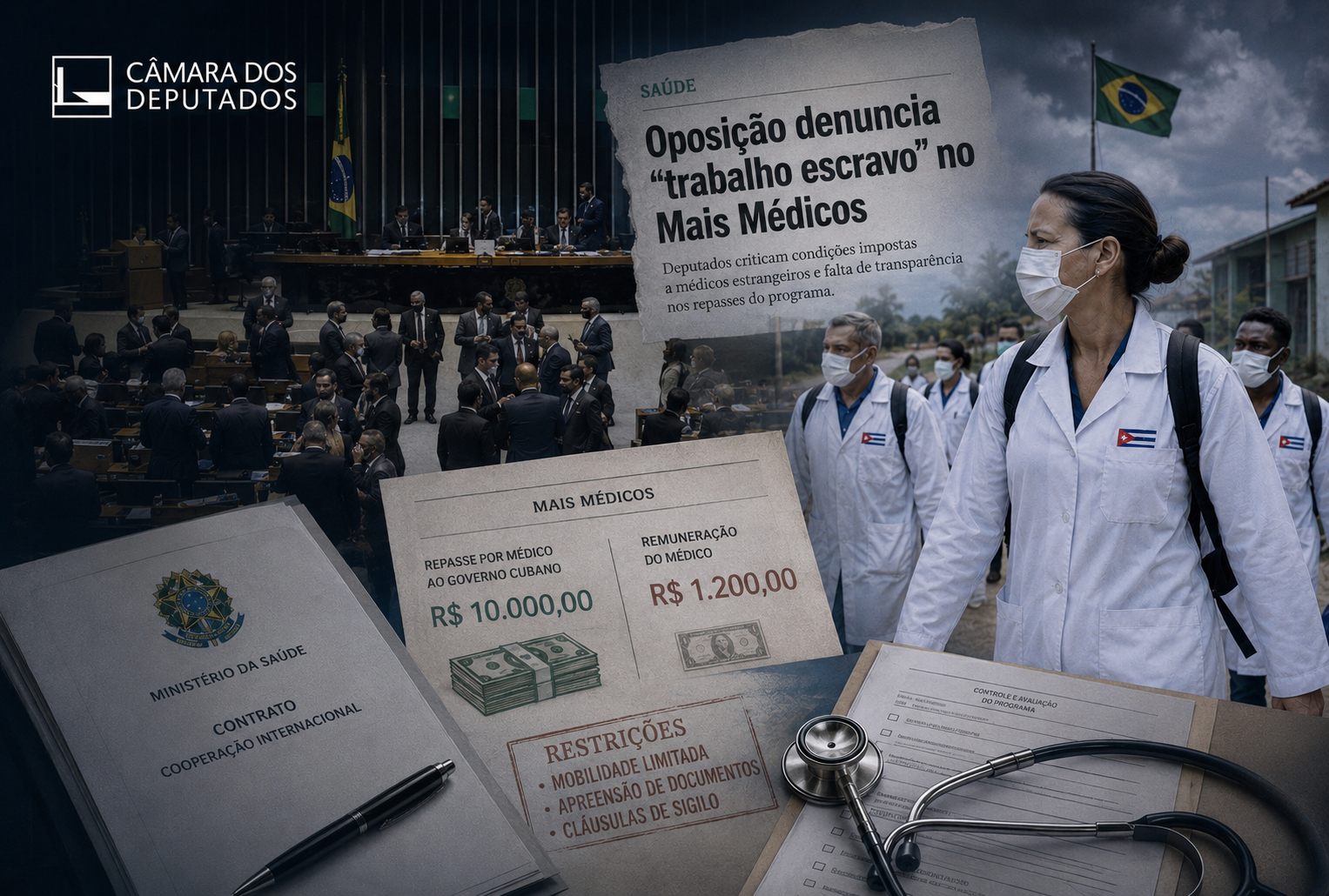
Cámara de Diputados de Brasil
Brazilian Chamber 2013: opposition denounces “slave labour” in Mais Médicos
During Brazilian parliamentary debates on the Mais Médicos program, opposition deputies denounced the proposed conditions for Cuban professionals as “slave labour.” Criticism focused on partial payment of remuneration, restrictions on bringing relatives, document controls, and the gap between what Brazil paid and what Cuban doctors received. Although the Brazilian government rejected the allegation, the session is an early national parliamentary antecedent in a key host country for the regional debate.
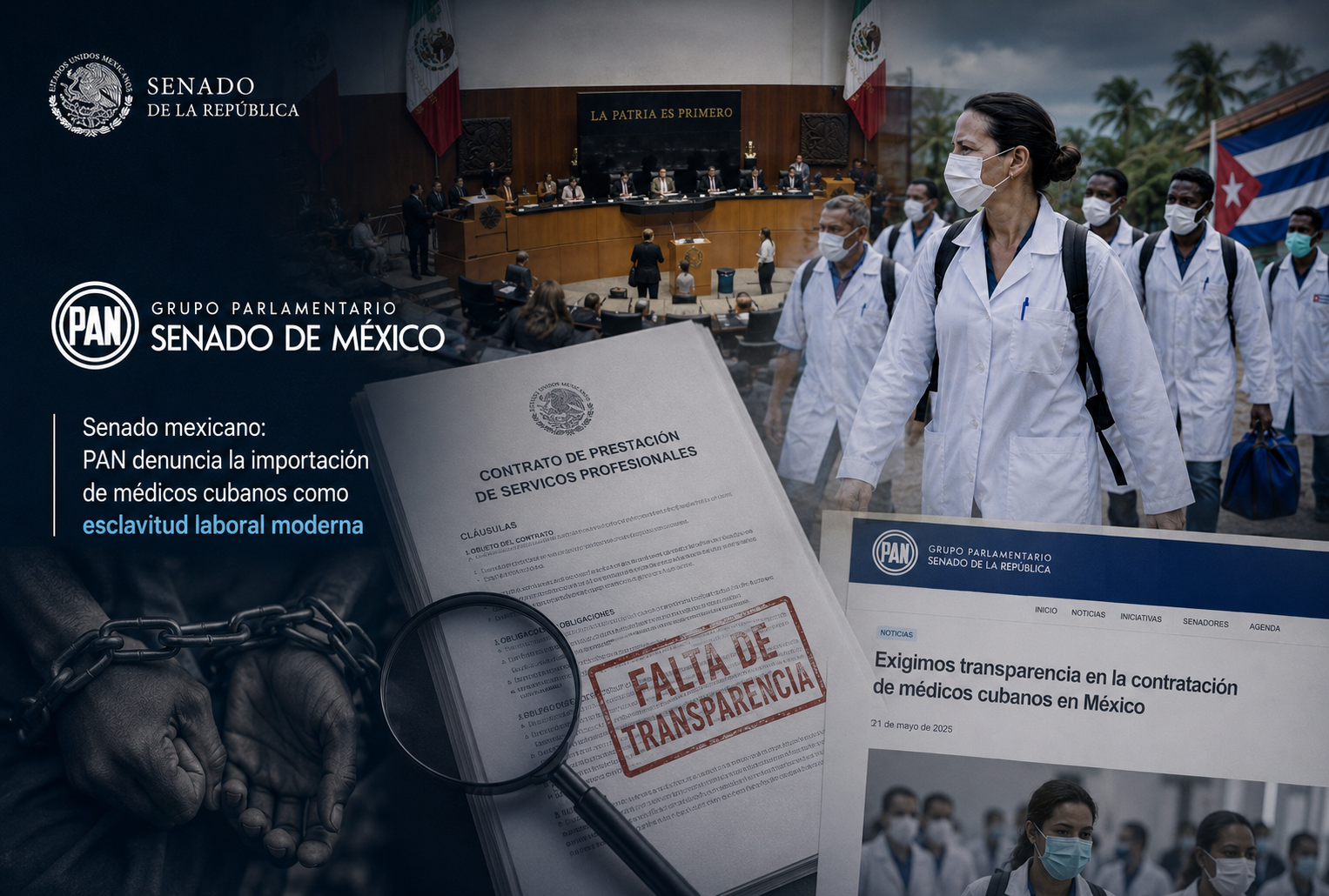
Grupo Parlamentario PAN – Senado de México
Mexican Senate PAN group denounces the importation of Cuban doctors as modern labour slavery
Julen Rementería, coordinator of the PAN parliamentary group in Mexico’s Senate, denounced the Mexican government’s hiring of Cuban doctors. He said 768 Cuban doctors were in Mexico and described the scheme as a criminal act and a form of modern labour slavery, arguing that professionals did not participate voluntarily and that Cuba compelled them. It is a parliamentary-group statement, not a full Senate resolution, but is relevant as a national condemnation in an OAS host country.
Complaints
Complaints filed before international bodies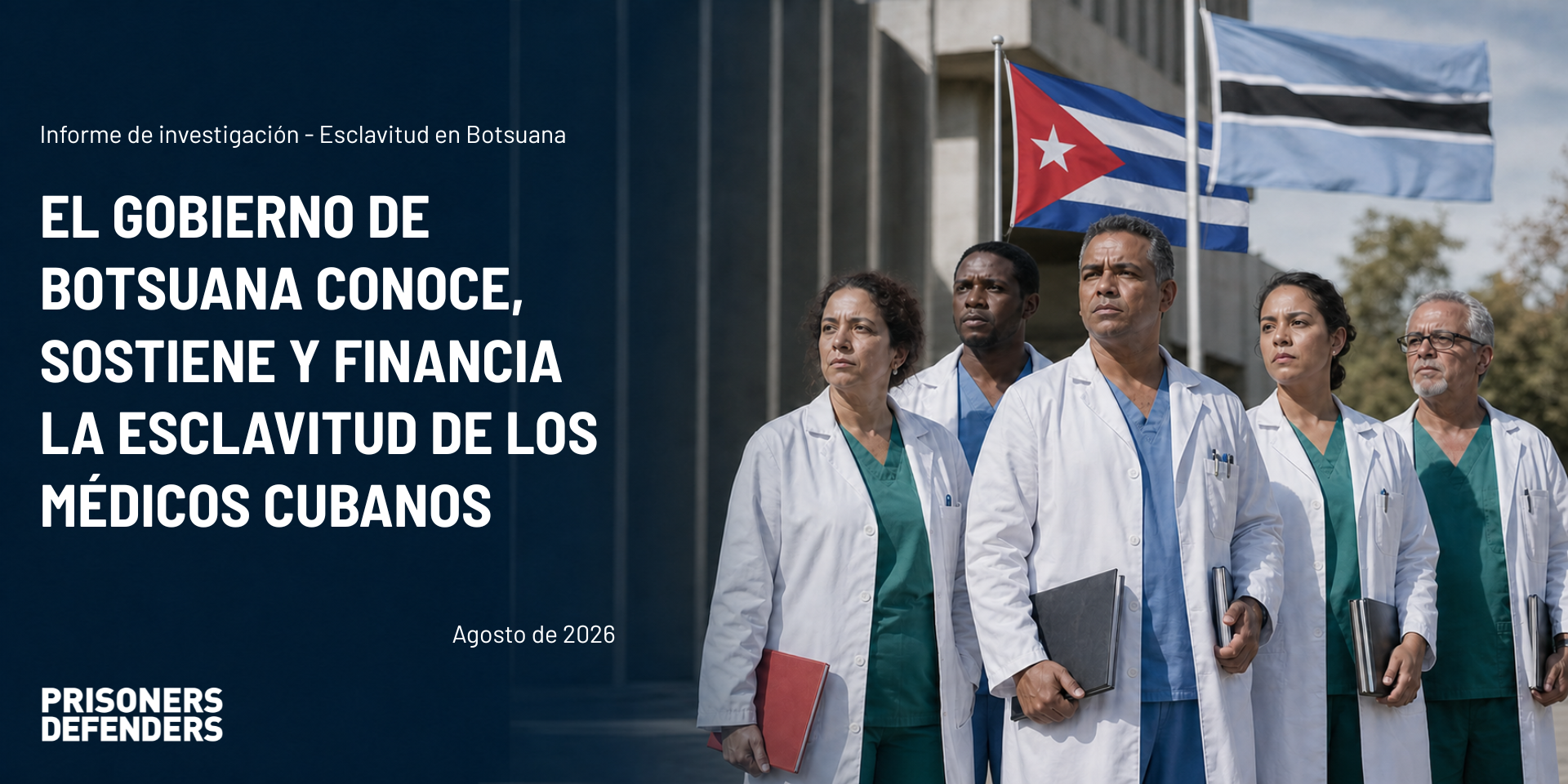
Prisoners Defenders
Botswana’s government knows about, sustains and finances the enslavement of Cuban doctors
In 2024, the State of Botswana signed an agreement under which it pays €3,500 per month—US$4,094.65 at the official exchange rate—for each specialist, while the Cuban professional receives only US$1,000 (24.42%). The gross difference amounts to 75.58% of the contractual rate. In this investigation, Prisoners Defenders documents the official agreement between Cuba and Botswana; estimated annual billing of more than US$4.2 million for a contingent of 90 professionals; and a mandatory internal regulation, signed on July 3, 2026, by the Cuban head of mission, Dr. Pablo Ricardo Betancourt Álvarez, restricting travel, visits, friendships, overnight stays, vehicle use, freedom of expression and social life.
Prisoners Defenders
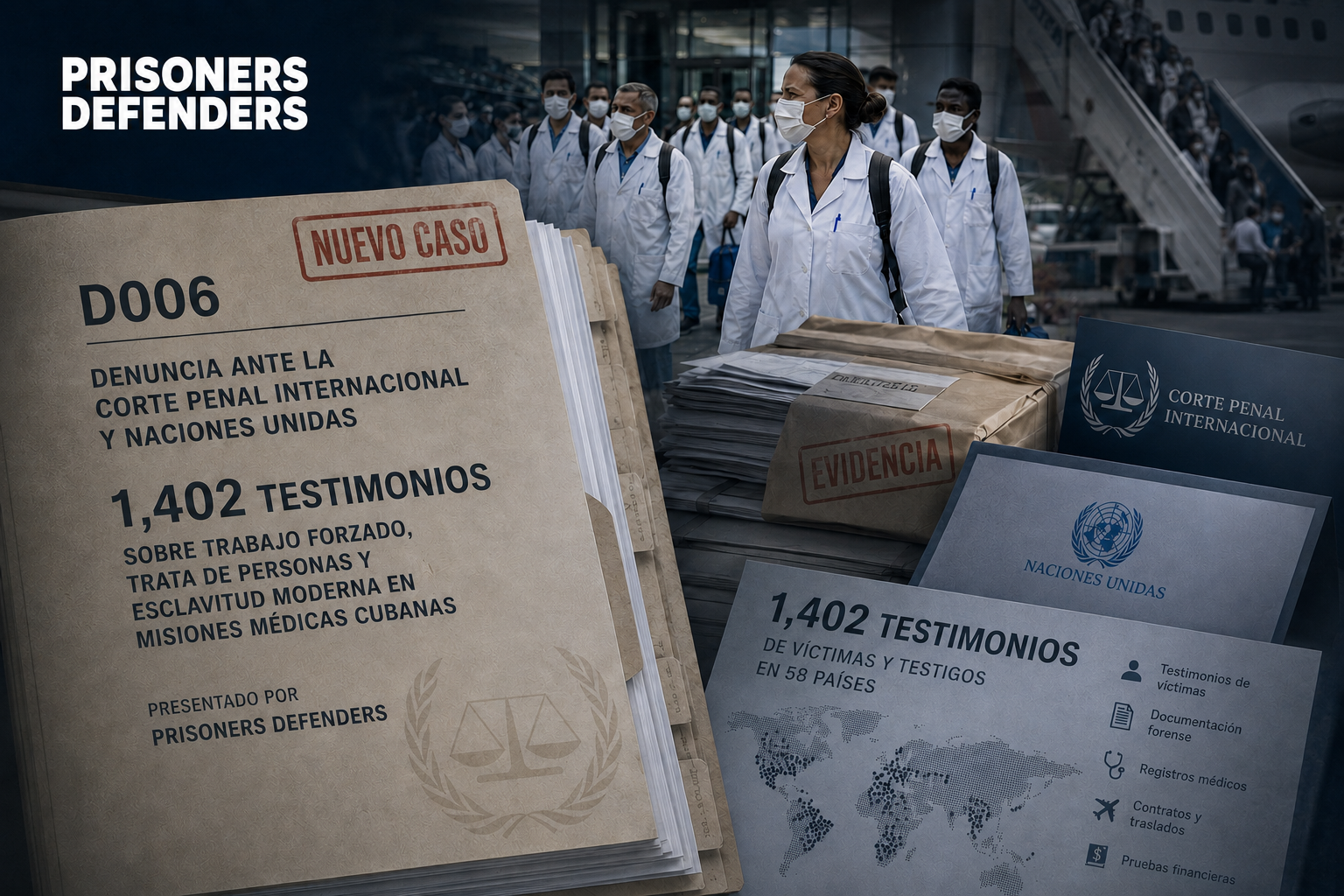
Prisoners Defenders files 1,402 testimonies in a new case before the ICC and the UN
In February 2024, Prisoners Defenders reported the filing of a new case before the International Criminal Court and the United Nations, supported by 1,402 testimonies from persons affected by Cuban missions and other overseas labour schemes. The action seeks to demonstrate the scale, continuity, and systemic nature of the phenomenon. Documentary-wise, the record stands out for the growth of the evidentiary base and for the effort to connect experiences across professions and receiving countries under a common characterization of modern slavery, persecution, and other inhumane acts.
Human Rights Foundation
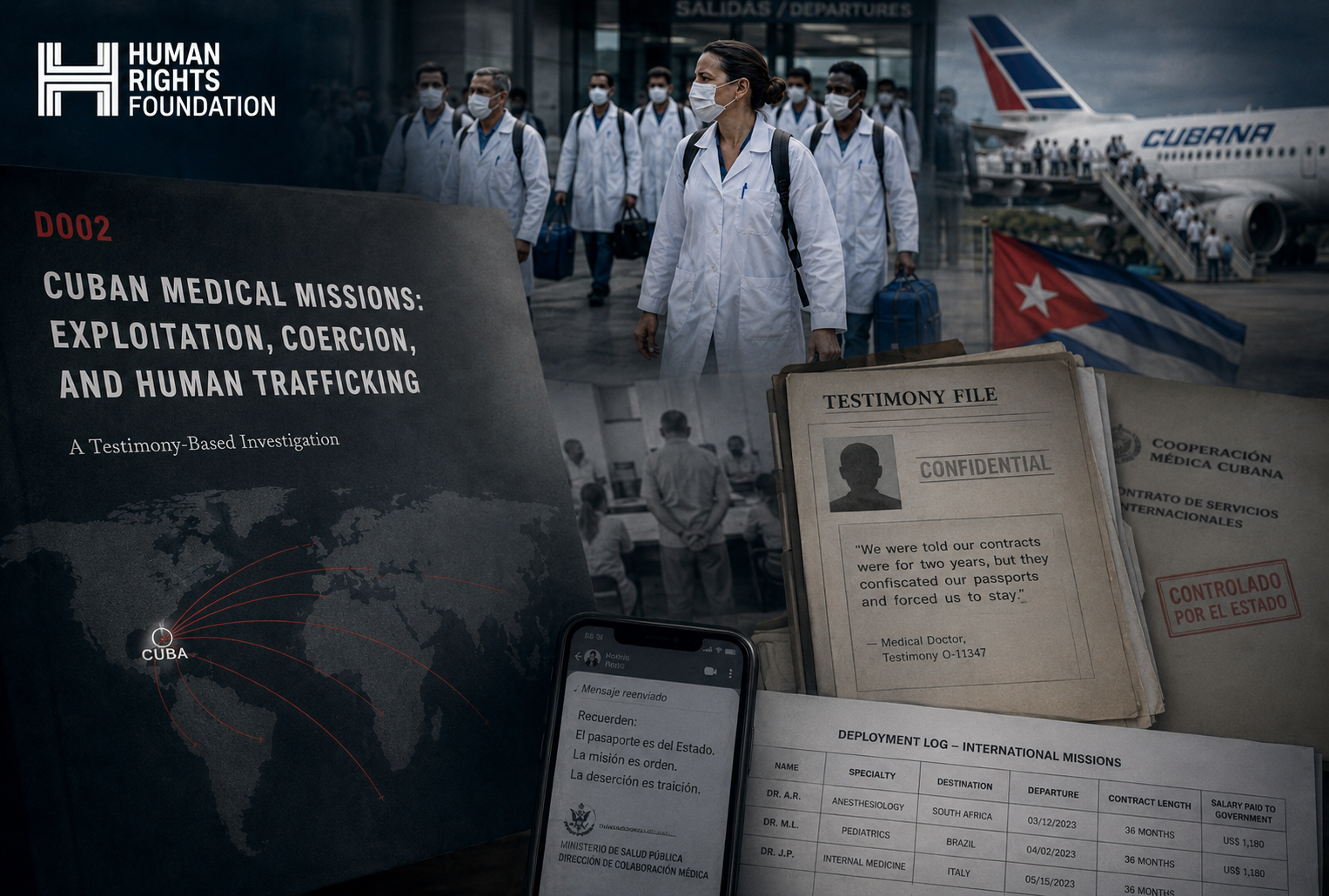
Human Rights Foundation: report on Cuban medical missions and human trafficking
Human Rights Foundation’s 2022 report examines Cuban medical missions through the lens of human trafficking and modern slavery. Drawing on testimony, legal analysis, and contract review, the organization argues that the Cuban State derives economic benefit from a system of coercion, control, and deprivation of rights. The document was important because it reinforced, within international civil society, the idea that the medical brigades should not be understood only as a cooperation program, but also as a mechanism for exploiting highly qualified workers.
Prisoners Defenders
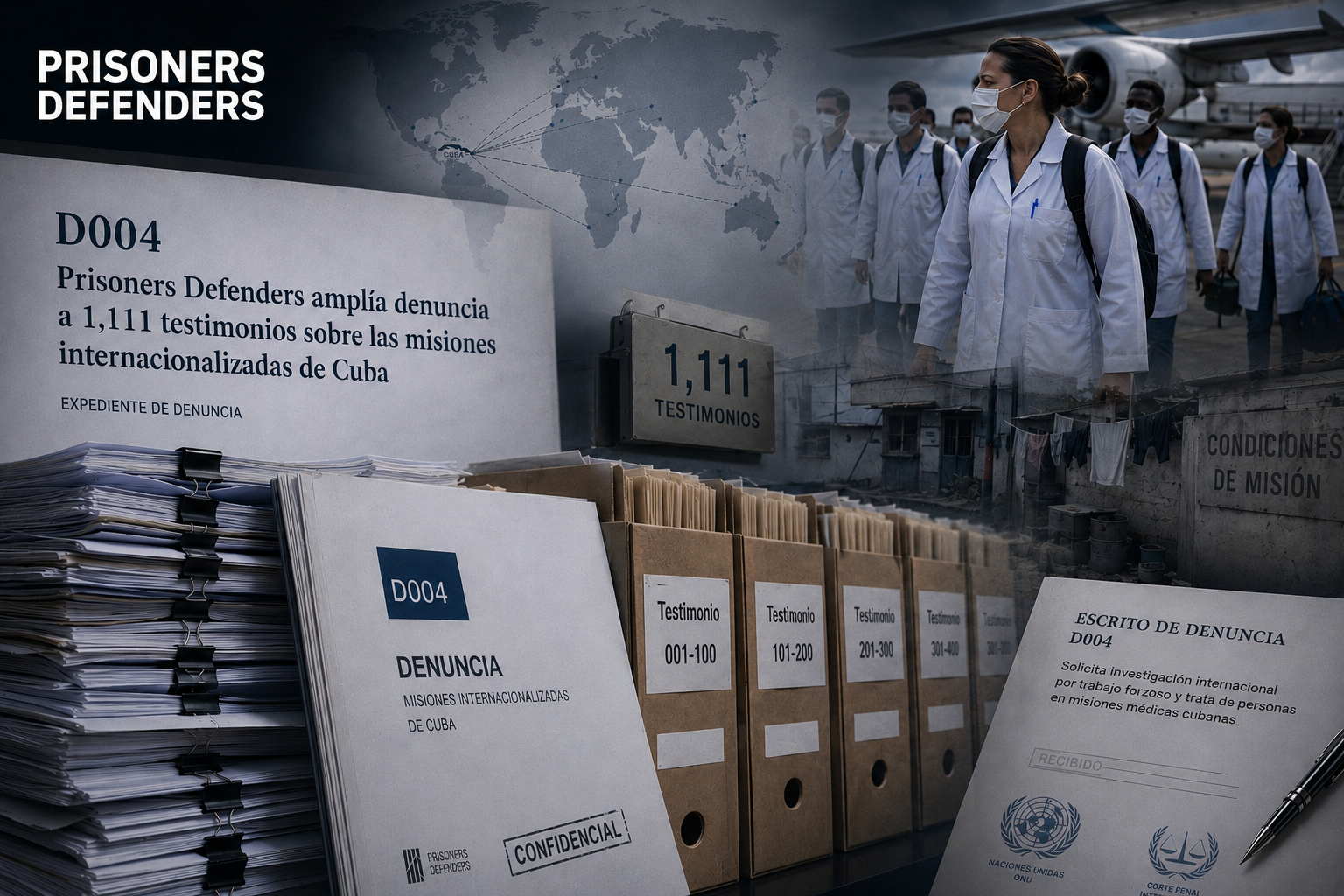
Prisoners Defenders expands its complaint with 1,111 testimonies on Cuba’s internationalized missions
In 2022, Prisoners Defenders expanded the evidentiary record on Cuba’s internationalized missions to 1,111 testimonies. The organization argued that the pattern of abuse was not limited to doctors, but also affected other professionals sent abroad under State control. The complaint reinforced the systemic nature of the problem and was used to continue pressing international bodies. Its documentary significance lies in the continuity of the evidence-gathering effort, the consistency of the described patterns, and the expansion of the professional groups examined.
Prisoners Defenders
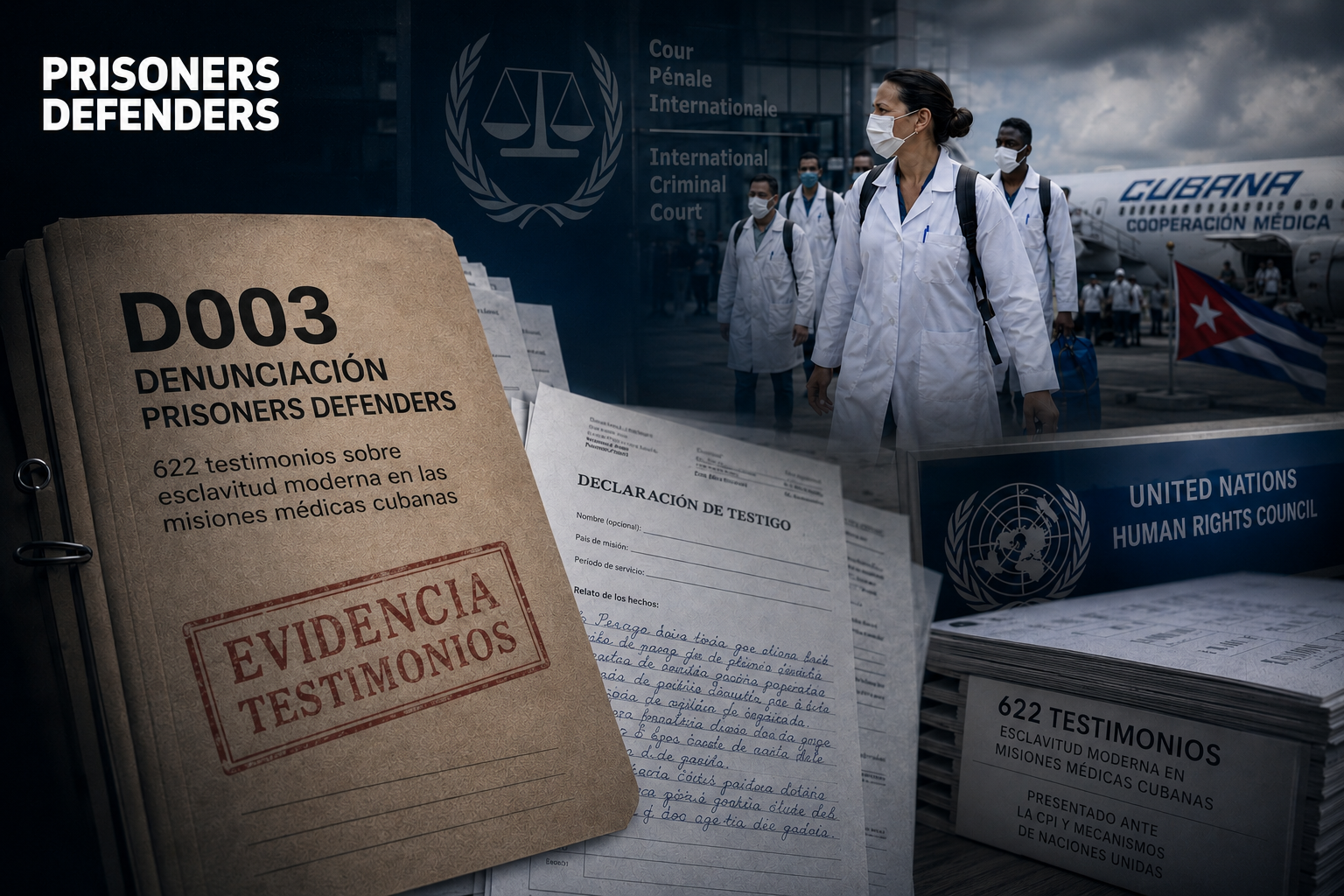
Prisoners Defenders files 622 testimonies on modern slavery in Cuba’s medical missions
In September 2020, Prisoners Defenders announced that it had submitted to the International Criminal Court and UN mechanisms a complaint supported by 622 testimonies concerning Cuba’s medical missions. The organization argues that the system combines wage confiscation, threats, restrictions on freedom, family separation, and criminal penalties. This complaint is relevant because it helped structure much of the later international record and because it supplied a broad, documented evidentiary base later cited by institutional actors, media outlets, and human-rights organizations.
Human Rights Watch
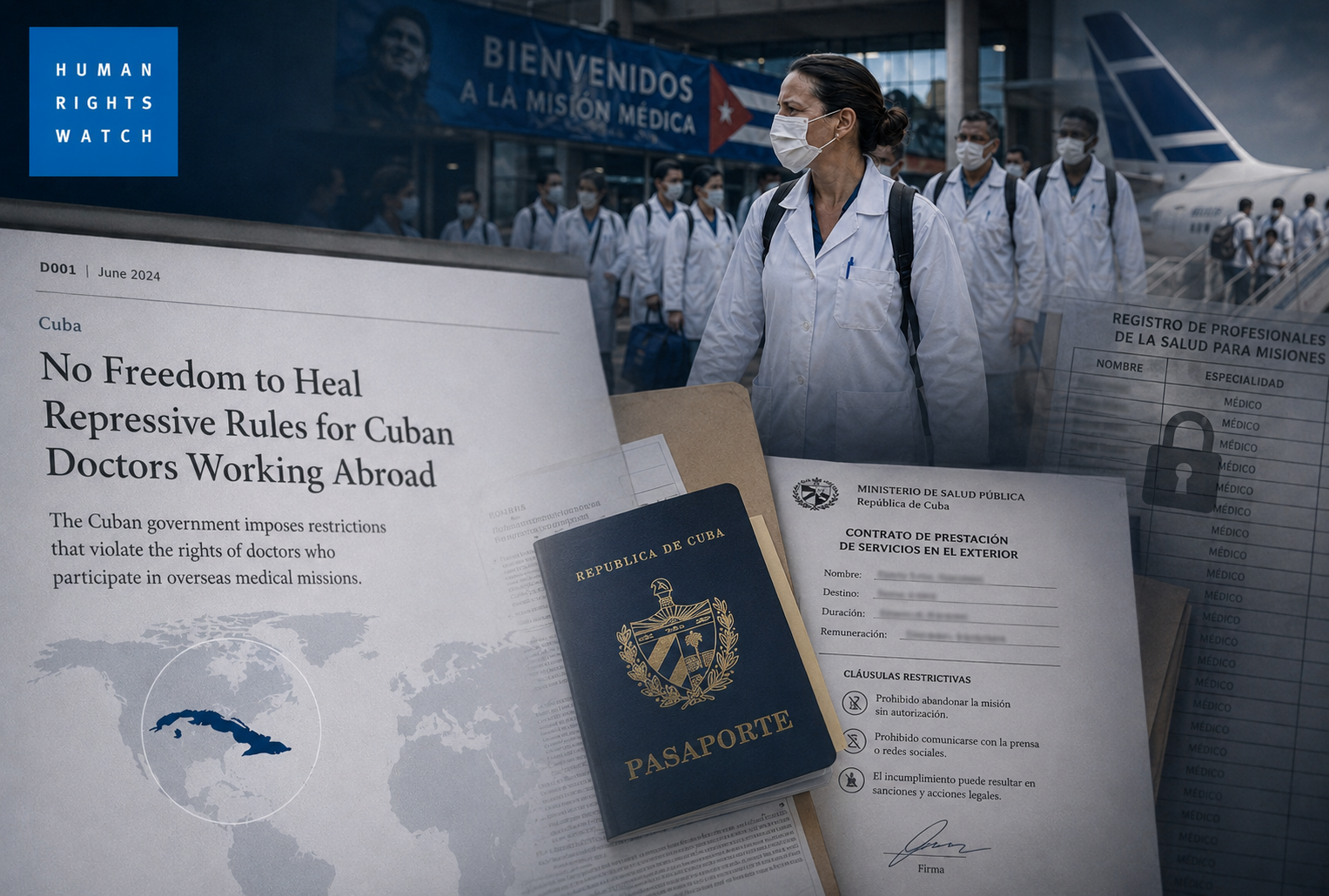
Human Rights Watch: “Cuba: Repressive Rules for Doctors Working Abroad”
In July 2020, Human Rights Watch published an analysis based on Cuban regulations and testimony, arguing that the rules imposed on Cuban doctors working abroad are repressive and violate fundamental rights. The report highlights movement restrictions, surveillance, penalties for leaving a mission, wage withholding, and pressure on private life. Although it comes from an NGO rather than an intergovernmental body, its pronouncement was highly influential because it provided an early, clear, and widely cited synthesis of the main coercive elements present in Cuba’s medical brigades.
Prisoners Defenders
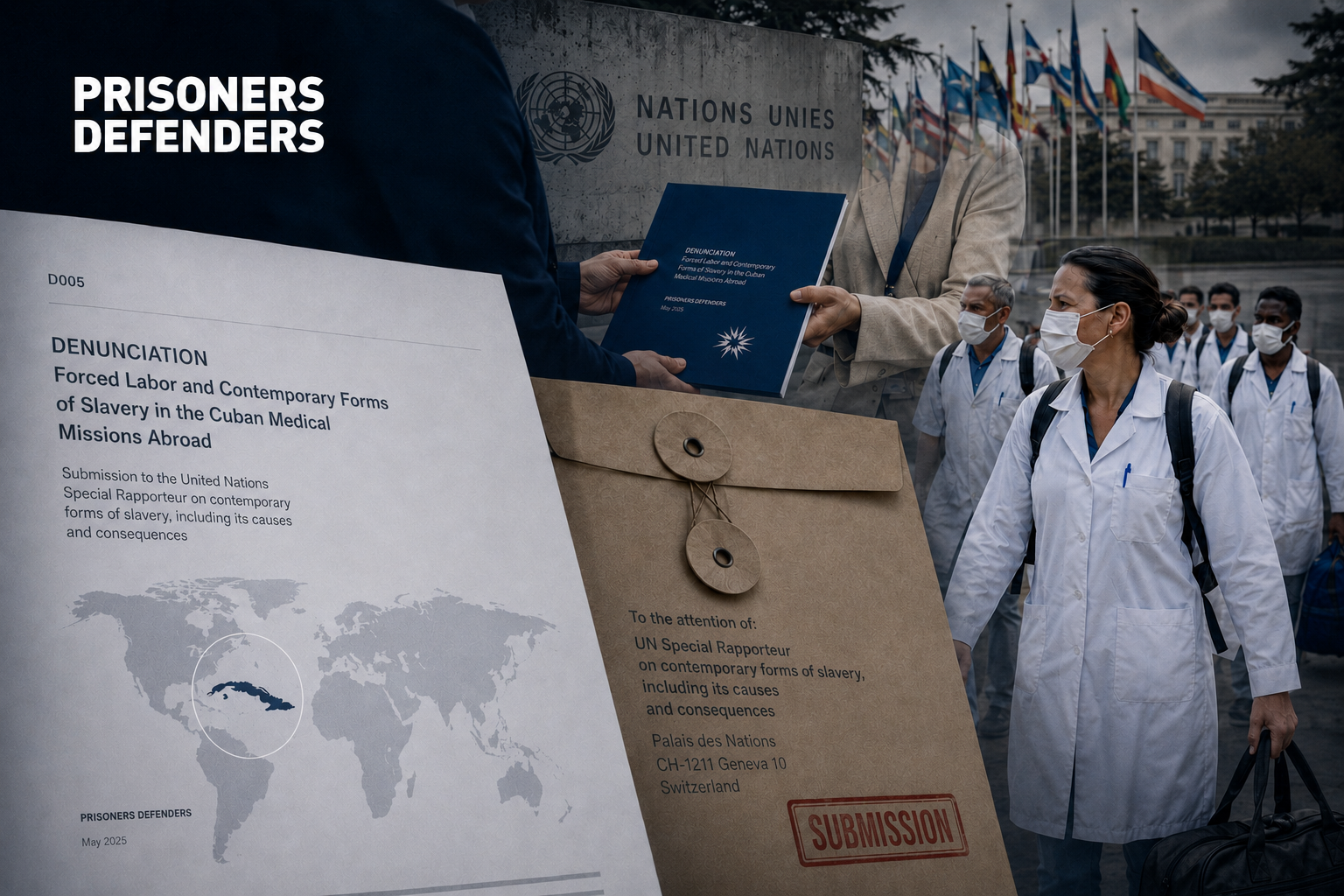
Prisoners Defenders submits to the UN a report on Cuba’s missions and contemporary slavery
At the end of 2023, Prisoners Defenders announced that it had submitted to the UN Special Rapporteur on contemporary forms of slavery a report focused on Cuban missions. The aim was to update and consolidate the available evidence prior to the new pronouncement by the mandate holder. The importance of this complaint lies in its role as direct input to the UN special procedures system and in the fact that it structures testimony, regulations, contracts, and coercive patterns documented by the organization over several years.
CIDH
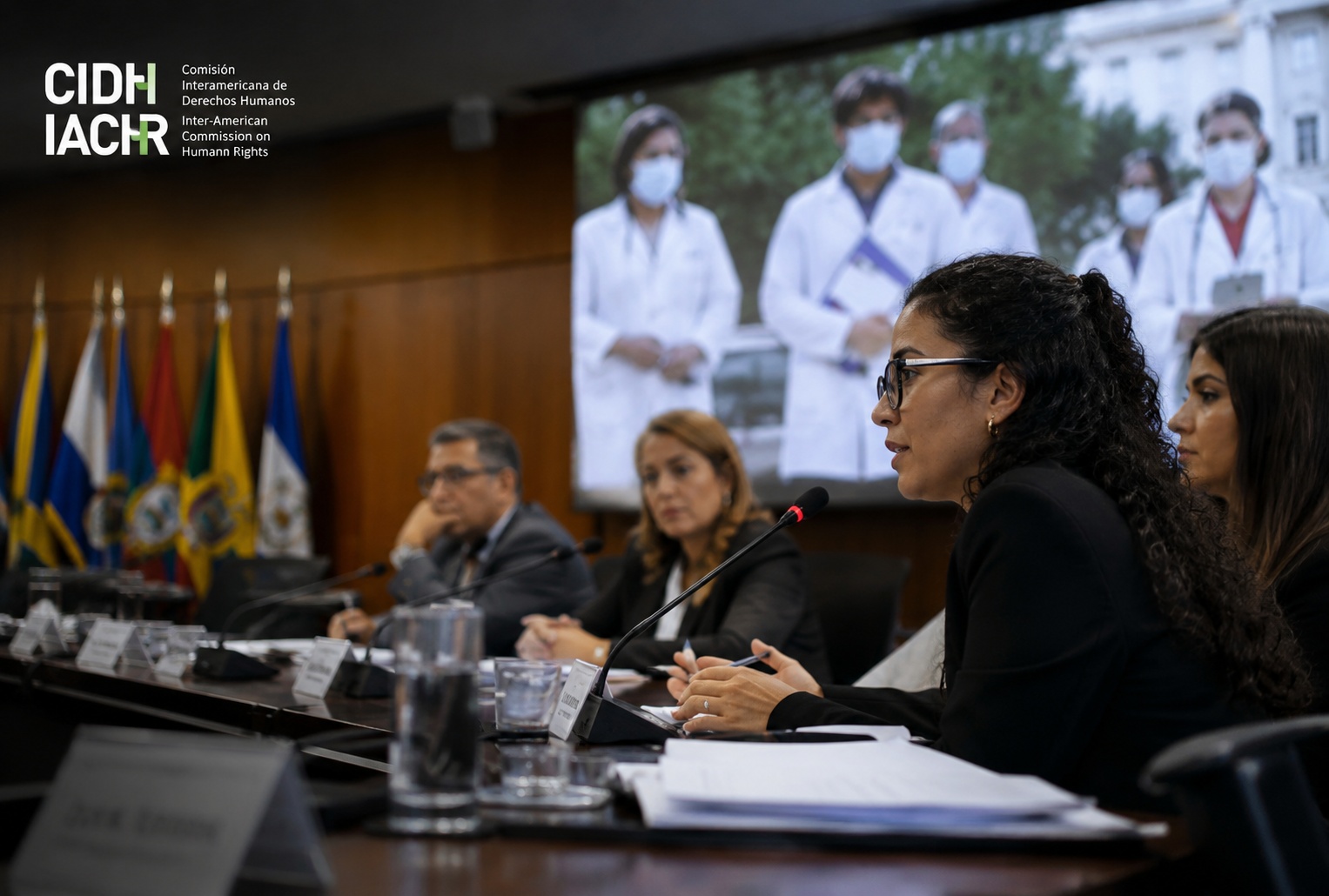
IACHR public hearing: “Cuba: Human rights of persons participating in medical missions”
During its 189th session, the IACHR held on 29 February 2024 a public hearing specifically devoted to the situation of persons participating in Cuban medical missions. The very decision to convene a thematic hearing ex officio shows that the Commission regarded the matter as a stand-alone issue of regional importance. The hearing file brings together the official description of the topic, the participating organizations, and the full video of the session, making it a key milestone in institutional visibility and follow-up within the Inter-American system.
Ordem dos Médicos / BMJ
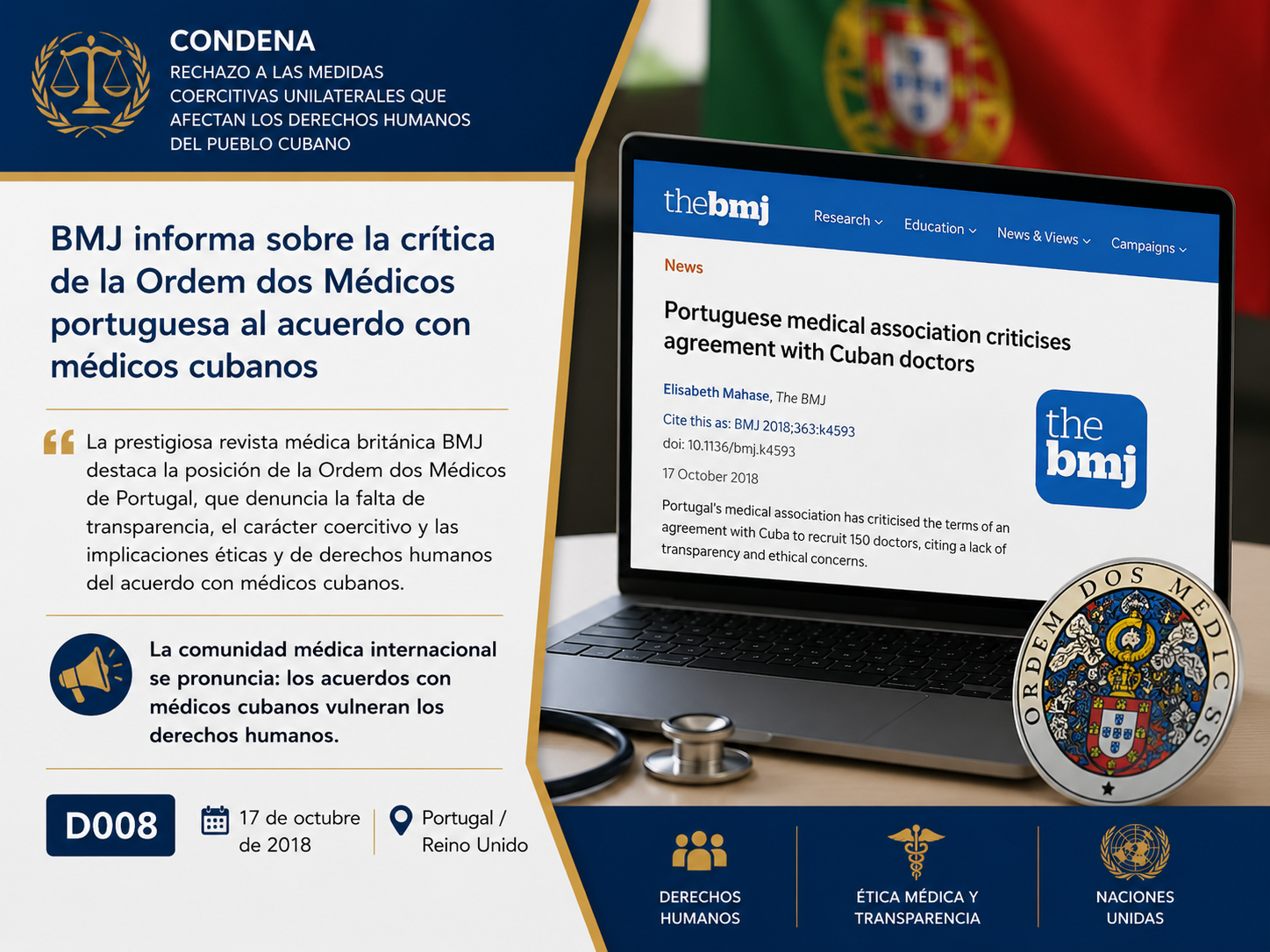
BMJ reports on criticism by Portugal’s Medical Association of the agreement involving Cuban doctors
This BMJ article documents how Portugal’s Medical Association criticized the arrangement to bring in Cuban doctors and described the system as degrading or close to exploitation, focusing on wages, State intermediation, and contractual conditions. Although the immediate source is journalistic, the record is valuable because it captures an early pronouncement by a representative European professional body on the nature of the scheme. It is especially useful in showing that concerns about Cuban medical brigades did not arise only in recent years or exclusively from the political sphere.
British Institute of International and Comparative Law (BIICL)
BIICL: international standards and forced labour in Cuban foreign medical missions
BIICL published research outputs on Cuban foreign medical missions from the perspective of international labour and human-rights law. The report acknowledges health benefits attributed to the program but emphasizes concerns raised by Cuban doctors, UN experts, civil society, and journalists over living and working conditions, exploitation, coercion, and retaliation against those who denounce practices or try to leave missions. It provides recommendations for Cuba, host states, and civil society, plus analysis of bilateral agreements and existing literature.
Human Rights Without Frontiers (HRWF)
HRWF: European Parliament conference on Cuban doctors and slavery-like exploitation
Human Rights Without Frontiers documented a European Parliament conference on Cuban medical missions. The article reported interventions by MEPs and experts describing Cuban doctors and healthcare personnel abroad as victims of trafficking and slavery-like exploitation. Although it is an NGO source rather than a legislative resolution, it is useful for mapping activities, actors, and the continuity of European pressure between the 2021 resolutions and later debates on medical brigades.
Prisoners Defenders
Prisoners Defenders: UN points to Cuba, Spain, Italy, Qatar, and MSC over labour missions
Prisoners Defenders publicized and analyzed UN communication AL CUB 2/2023, emphasizing that the Special Rapporteur requested explanations from Cuba and copied Spain, Italy, Qatar, and MSC Cruises. The NGO highlighted alleged practices such as surveillance, passport retention, inconsistent contracts, long hours, wage retention, and lack of protection. The record helps identify European and corporate actors appearing in UN documentation and civil-society denunciations.
Senado de España
Motion tabled before the Spanish Senate’s Ibero-American Affairs Committee on the hiring of Cuban doctors
Filed on 23 March 2026, this motion by the Popular Group in the Senate proposed condemning the forced deployment of Cuban healthcare professionals through medical brigades and reviewing any Spanish cooperation that might fund or tolerate forced-labour schemes. The text expressly cites the UN Special Rapporteur on contemporary slavery, the European Parliament, and the risk of complicity by third States. Although it is still the parliamentary initiative preceding the vote, it is relevant because it systematically frames a Spanish institutional response grounded in international human-rights standards.
Cámara de Diputados de Brasil
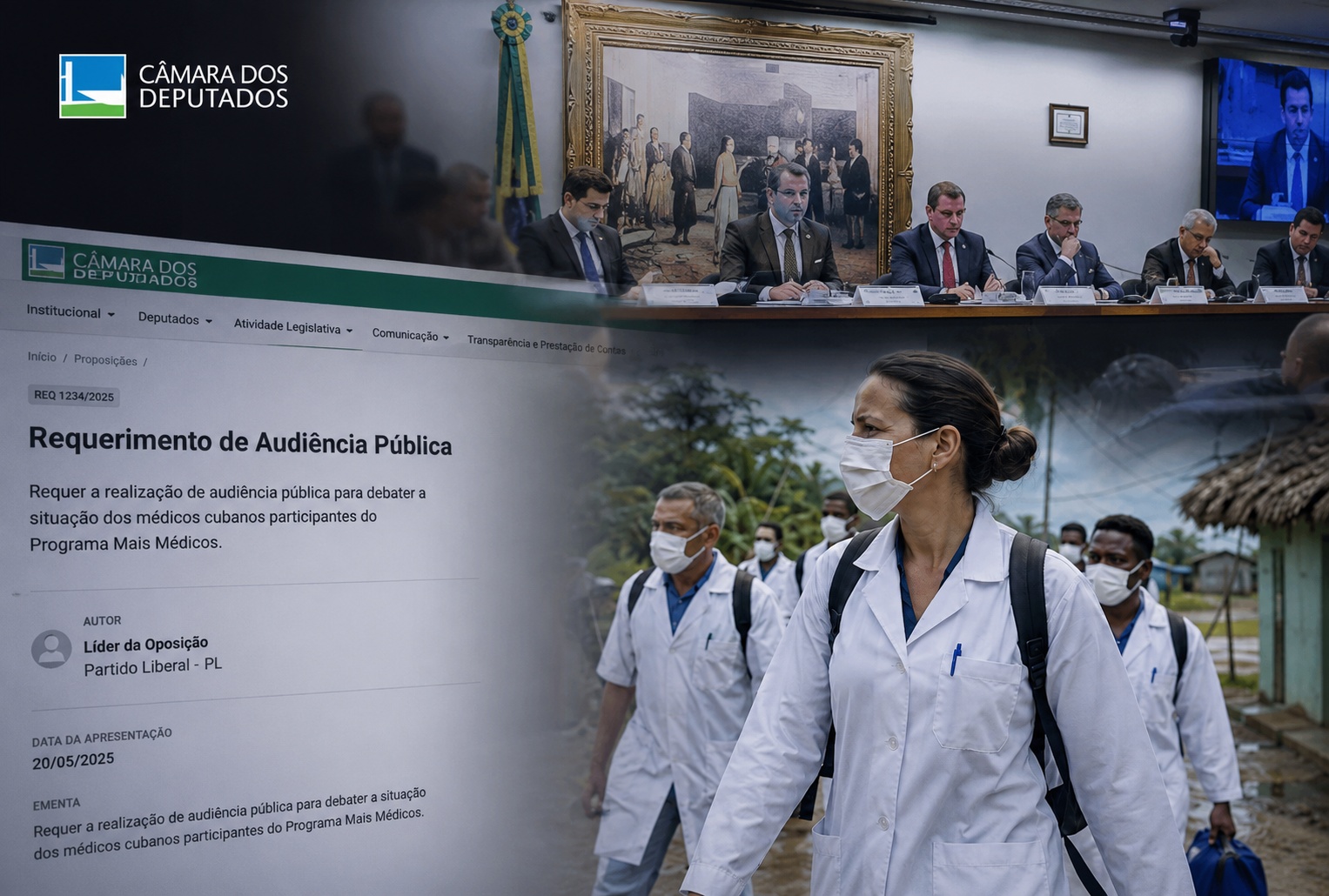
Brazilian opposition seeks parliamentary debate on the situation of Cuban doctors in the Mais Médicos program
In September 2013, the Brazilian Chamber of Deputies officially publicized an initiative by opposition lawmakers to open a parliamentary debate on the situation of Cuban doctors incorporated into the Mais Médicos program. The announcement shows that, from the outset of the Brazil-Cuba arrangement, public questions already existed about contractual conditions, professional freedom, and possible exploitation. Although it is not an adopted resolution, it is still a formal parliamentary pronouncement because it triggers legislative scrutiny and places the suspicion of rights violations in the Cuban hiring scheme on Brazil’s institutional agenda.
Cámara de Diputados de Brasil
Brazil’s Human Rights Committee debates the situation of Cubans in the Mais Médicos program
In October 2013, Brazil’s Chamber of Deputies convened a specific debate in its Human Rights Committee to examine the situation of Cuban professionals in the Mais Médicos program. Bringing the issue into a human-rights committee shows that doubts about labour and human-rights conditions had reached a significant parliamentary level. The hearing gave visibility to allegations of contractual dependency, lack of autonomy, and possible exploitation of Cuban doctors hired under the agreement involving Cuba and PAHO.
Cámara de Diputados de Brasil
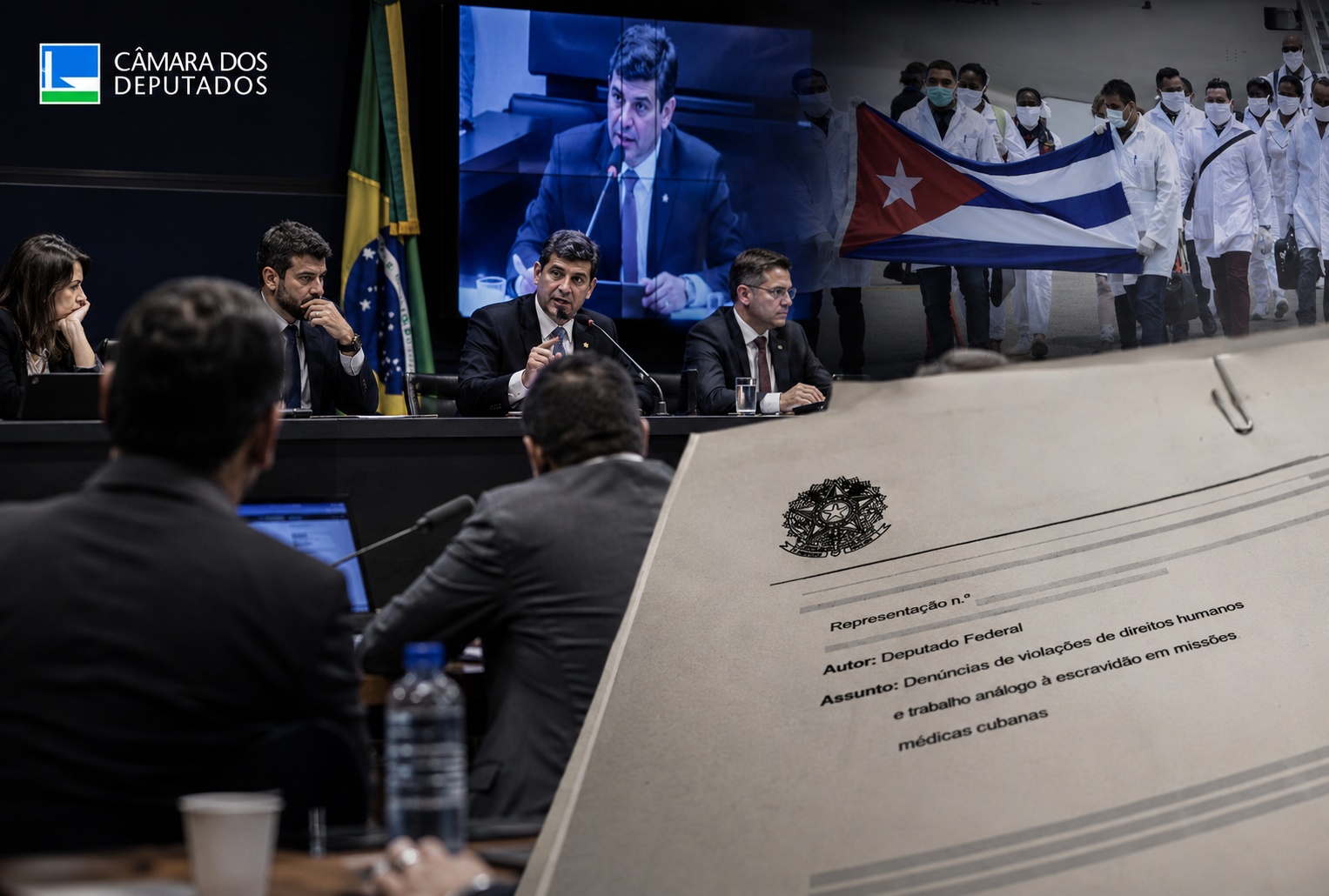
Hearing in Brazil’s Chamber on allegations of human-rights violations and slavery-like labour in Cuban medical missions
In 2025, Brazil’s Chamber of Deputies announced a public hearing specifically devoted to allegations of human-rights violations and slavery-like labour in Cuban medical missions. The official wording of the hearing’s purpose is striking for the strength of its language. The event reflects a renewed parliamentary scrutiny in Brazil more than a decade after the Mais Médicos program and links the Brazilian experience to the subsequent international debate, particularly within the UN, the IACHR, and the European Parliament.
Senado de México
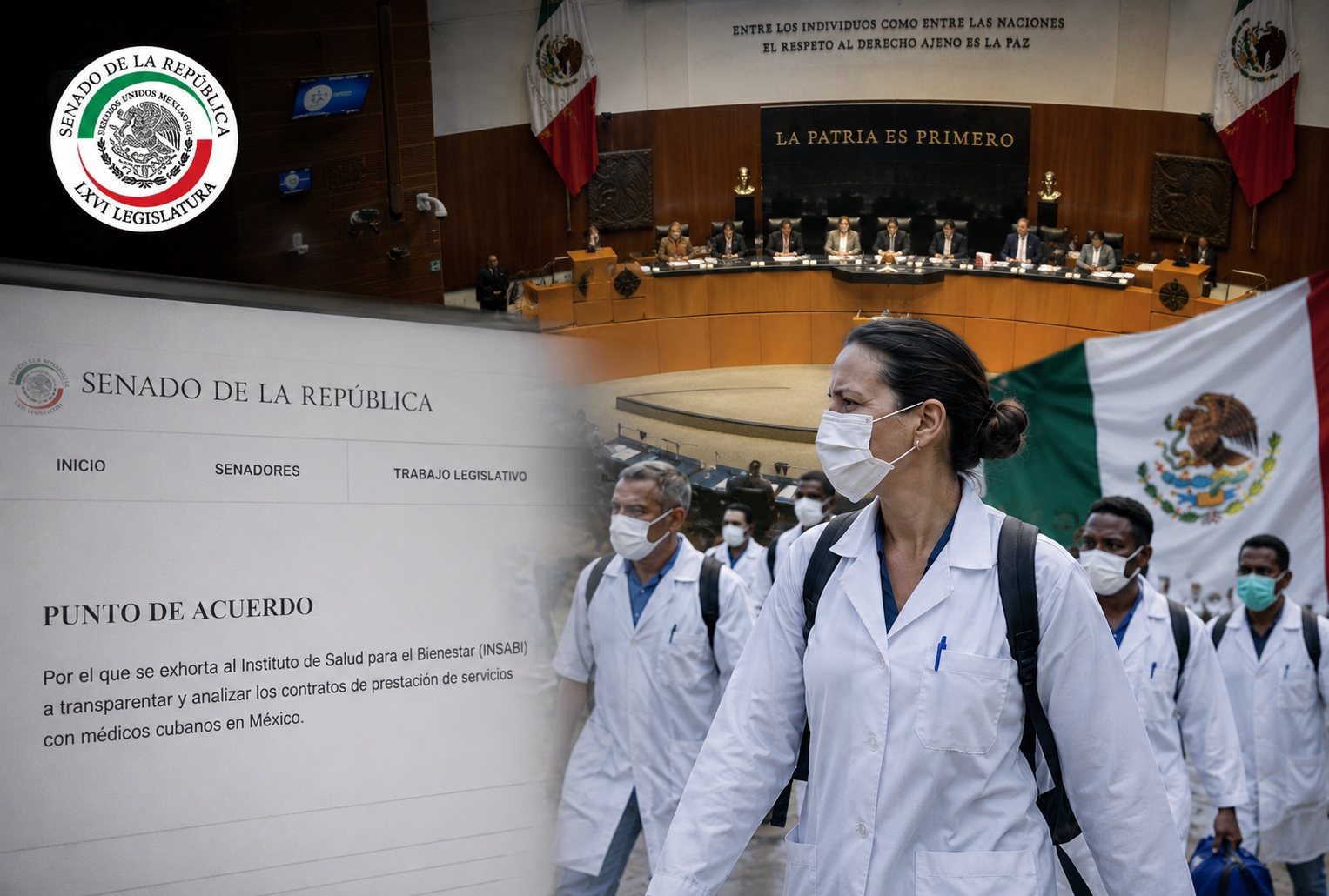
Motion to review INSABI’s hiring of Cuban doctors
In July 2020, the Mexican Senate publicized the filing of a motion to review INSABI’s hiring of Cuban doctors. The parliamentary pronouncement relied on concerns about labour conditions, contractual transparency, and international allegations of human-rights violations in Cuba’s missions. Although its immediate focus was the conduct of the Mexican government, the document is regionally relevant because it shows how alerts about exploitation and forced labour began to reach the parliaments of receiving countries.
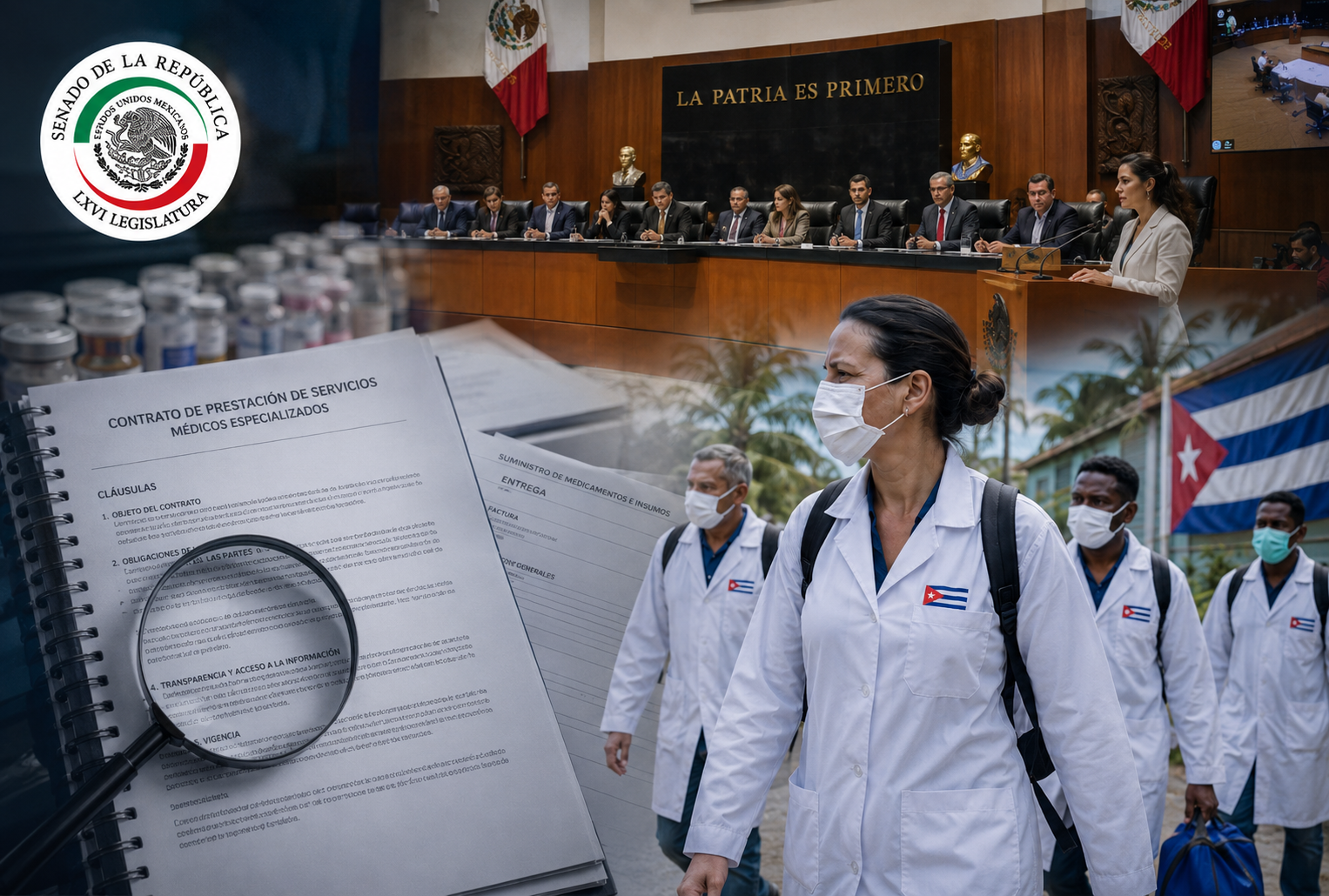
Senado de México
PAN lawmakers demand transparency in contracts with Cuban doctors and pharmaceutical companies
In June 2025, the Mexican Senate publicized a parliamentary position demanding transparency in contracts signed with Cuban doctors and pharmaceutical companies. Although framed within a domestic political debate, the pronouncement again places contractual opacity and possible Mexican participation in a scheme criticized for labour exploitation and rights violations at the centre of attention. Its documentary value lies in confirming that the issue remained on Mexico’s legislative agenda and that scrutiny of the contractual relationship with the Cuban State continued.
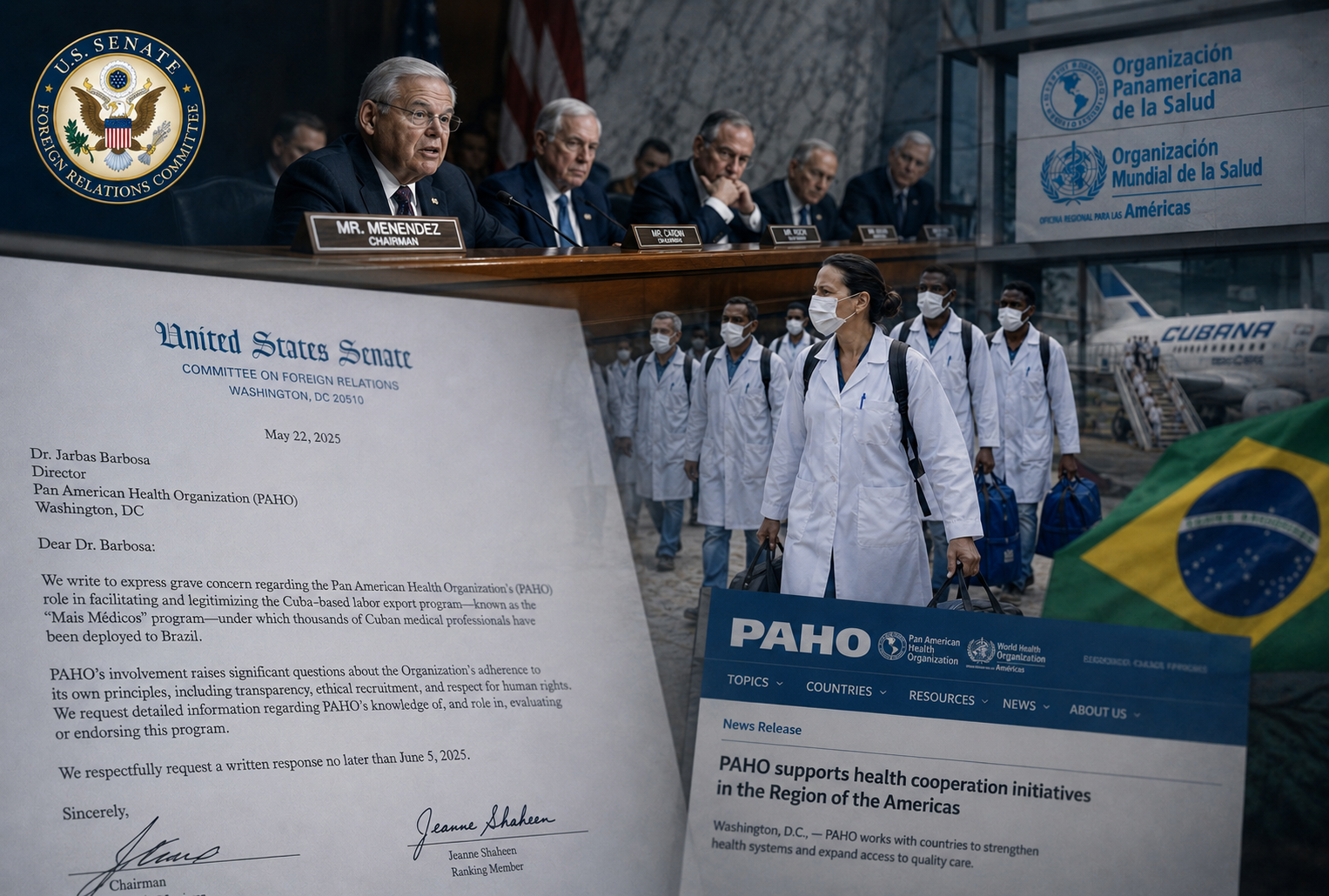
3 senadores de los Estados Unidos
Menendez and other senators seek answers from PAHO on its role in the Cuban doctors scheme in Brazil
In May 2019, U.S. Senators Marco Rubio, Robert Menendez, and Rick Scott sent a letter to Secretary of State Mike Pompeo with a complaint about Cuba’s medical missions, alleging that they are a global scheme of forced labor and human trafficking. The document notes that under Brazil’s Mais Médicos program—structured to circumvent U.S. sanctions—the Cuban regime confiscated 75% of the professionals’ salaries, took away their passports, and prohibited them from traveling with their families. In response, the senators demanded the reinstatement of the “parole” visa program for defecting doctors, the downgrading of Cuba to the lowest category (Tier 3) in the Trafficking in Persons Report, and an assessment of the legal responsibilities of the Pan American Health Organization (PAHO), Brazil, and Cuba regarding these human rights violations.
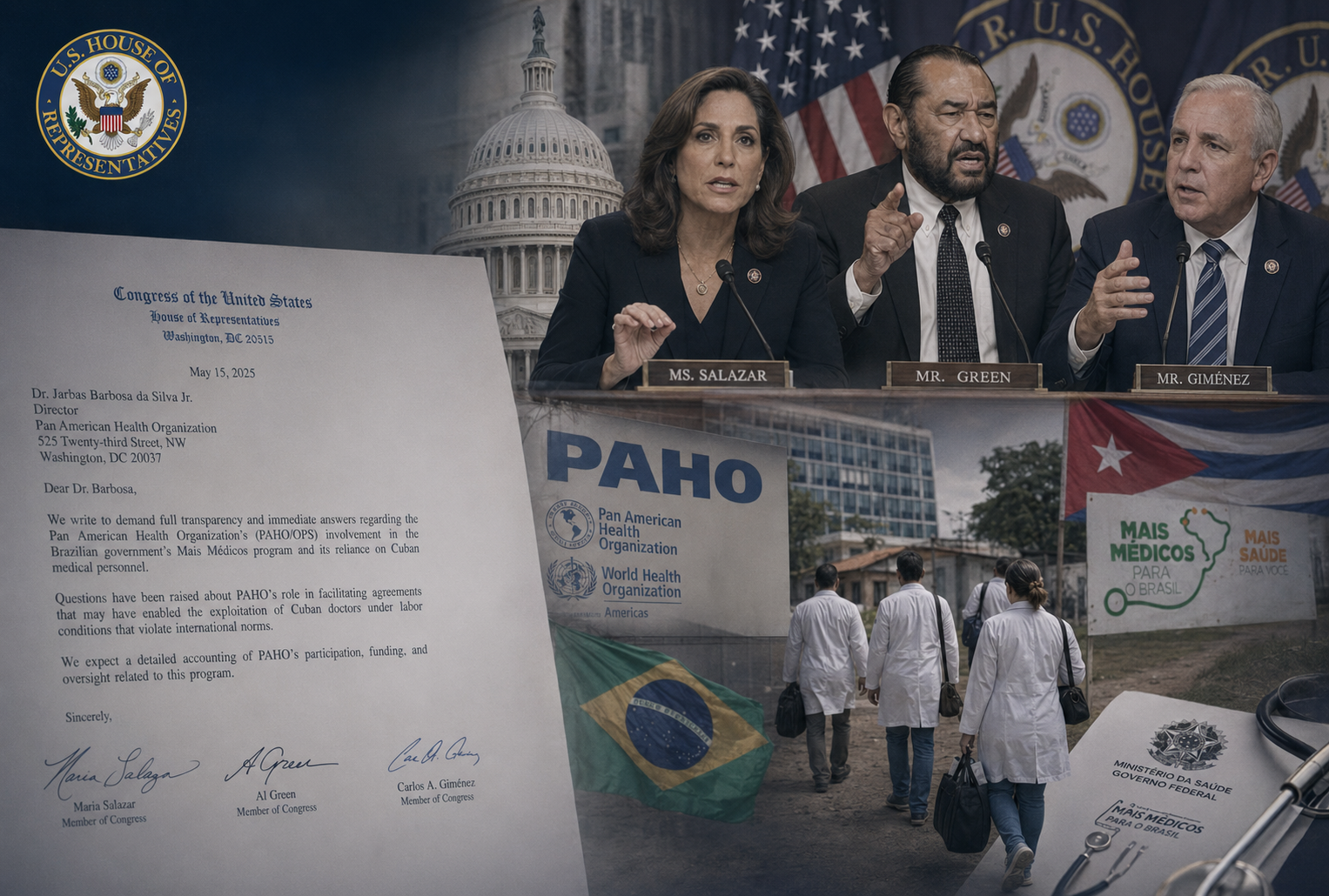
Cámara de Representantes de EE. UU.
Salazar, Green, and Giménez demand answers from PAHO on its involvement in the Brazilian case
Through this parliamentary action, members of the U.S. House of Representatives demanded information from PAHO regarding its role in the transfer and hiring of Cuban doctors in Brazil. The text assumes that allegations of trafficking and exploitation warrant an institutional response and underlines that PAHO’s opacity prevents a clear understanding of the extent of its involvement. Such pronouncements reinforce the hemispheric dimension of the issue and show that it did not remain at the level of abstract statements, but generated concrete oversight of multilateral actors allegedly involved.
Press
Reports, press articles and documentary resourcesEl gobierno de Botsuana conoce, sostiene y financia la esclavitud de los médicos cubanos
El Estado de Botsuana suscribió en 2024 un convenio por el que paga 3.500 euros mensuales —4.094,65 dólares al cambio oficial— por cada especialista, mientras el profesional cubano recibe sólo 1.000 dólares (un 24,42%). La diferencia bruta asciende al 75,58% de la tarifa contractual. En esta investigación, Prisoners Defenders documenta el convenio oficial entre Cuba y Botsuana; una facturación anual estimada superior a 4,2 millones de dólares para un contingente de 90 profesionales; y una regulación interna de obligado cumplimiento, firmada el 3 de julio de 2026 por el jefe de misión cubano, Dr. Pablo Ricardo Betancourt Álvarez, que restringe desplazamientos, visitas, amistades, pernoctas, uso de vehículos, libertad de expresión y vida social.
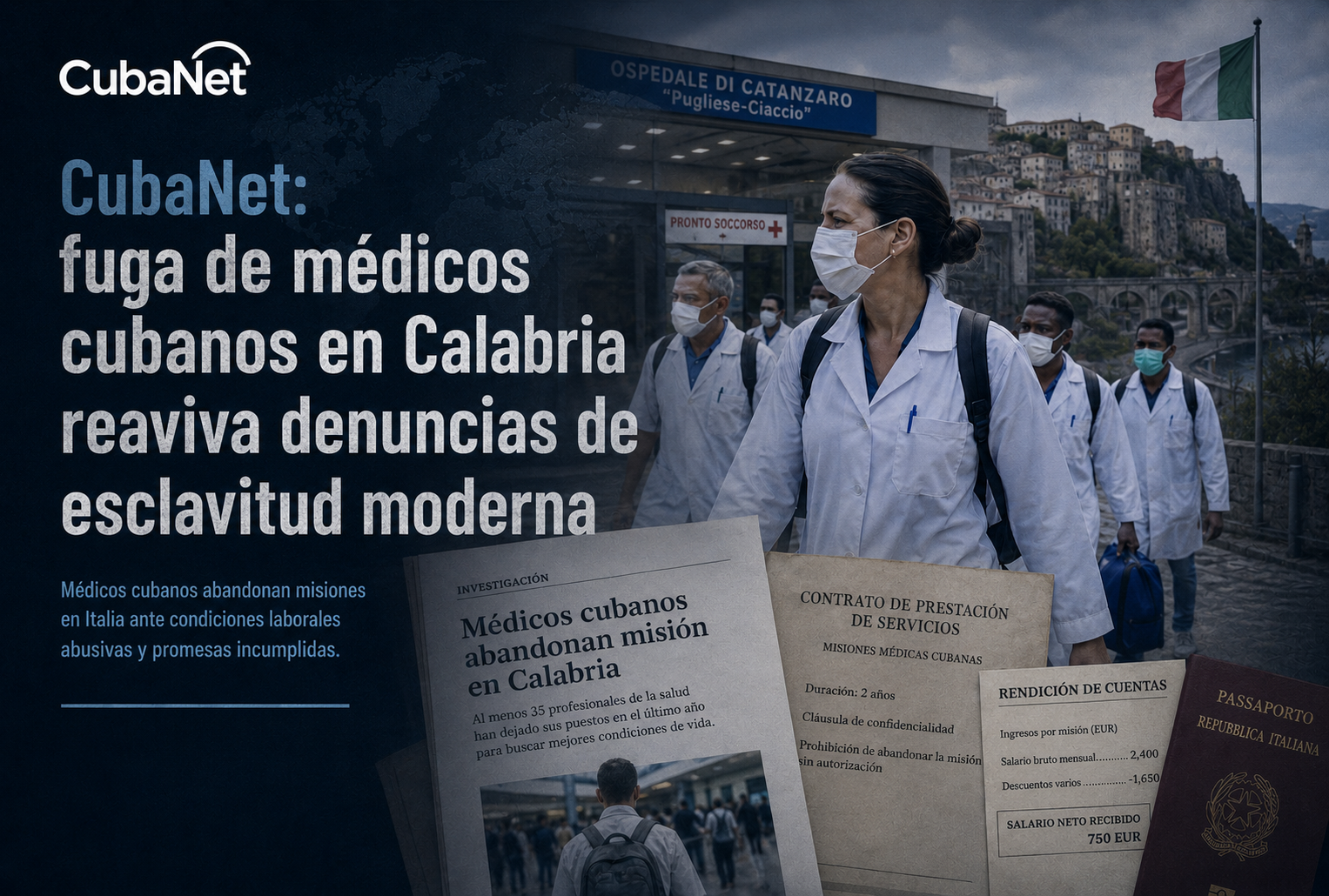
CubaNet: Cuban doctors' departures in Calabria revive modern-slavery allegations
CubaNet documented Cuban doctors leaving the mission in Calabria and the resulting political and contractual debate in Italy. The investigation pointed to the gap between regional payments and effective remuneration, alleged restrictive conditions, defections, and criticism of the role of Cuba's Medical Services Trading Corporation.
Naciones Unidas
Acusación Esclavitud a Cuba
Documento de Mandatos de la Relatora Especial sobre las formas contemporáneas de la esclavitud, incluidas sus causas y consecuencias; y de la Relatora Especial sobre la trata de personas, especialmente mujeres y niños
Parlamento Europeo
European Parliament Resolution 2021/2745(RSP) — Cuban medical brigades
Condemns systematic violation of labor rights of Cuban medical brigades, labeled a modern form of slavery by the IACHR. Cites non-compliance with ILO Conventions 29 and 105 on forced labor and references UN communication CUB 6/2019.
Justicia Federal de Brasil — Juez M. L. Coelho de Freitas
Federal ruling: slave labor in Mais Médicos
In litigation over the Mais Médicos program, the judge held that conditions faced by Cuban physicians amounted to a form of slave labor impermissible under Brazilian law.

UPI / BIICL: forced labor in Cuban medical missions
UPI reported on the IACHR findings: workers receive 2.5%–25% of host-country payments; Cuba earned US$4.882B from health service exports in 2022. The BIICL completed (Dec. 2025) an academic project analyzing missions under international labor and human rights law.
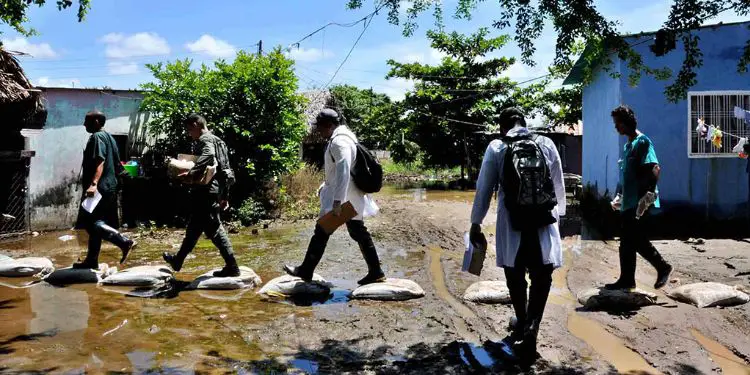
European Parliament CFSP 2025 Report — Amendment 311
In the EU's annual foreign policy report, the EP labeled Cuban medical brigades a violation of fundamental rights and a form of slavery and forced labor, invoking the EU Charter of Fundamental Rights and ILO conventions.
CIDH / REDESCA — OEA
IACHR-REDESCA Report: labor rights in Cuban medical missions
Based on 71 testimonies, the report concludes that documented conditions are compatible with forced labor and contemporary forms of slavery. Workers receive 2.5%–25% of fees paid by host countries; mobility restrictions and denial of union rights are documented.
Senado de España — Comisión de Asuntos Iberoamericanos
Spanish Senate motion: forced labor in Cuban medical brigades
Motion approved 19–11: condemns the deployment of Cuban healthcare workers under conditions constituting labor exploitation and forced labor, incompatible with international law.
:quality(75)/cloudfront-us-east-1.images.arcpublishing.com/elcomercio/2YEN2Q2LCBABVEJ2KH755JMSAI.jpg)
Matos Rodríguez et al. v. PAHO — U.S. Court of Appeals, D.C. Circuit
The court affirmed that PAHO lacks immunity from suit in the U.S., allowing Cuban physicians' claims that PAHO facilitated forced labor and human trafficking in Brazil's Mais Médicos program (2013–2018) to proceed.
Relatores Especiales ONU / OHCHR
Communication CUB 6/2019 — UN Special Rapporteurs
Reported conditions — wage retention, surveillance, movement restrictions, criminal penalties of up to 8 years for desertion — could constitute forced labor under ILO indicators. Forced labor is a contemporary form of slavery. Reiterated Nov. 2, 2023.
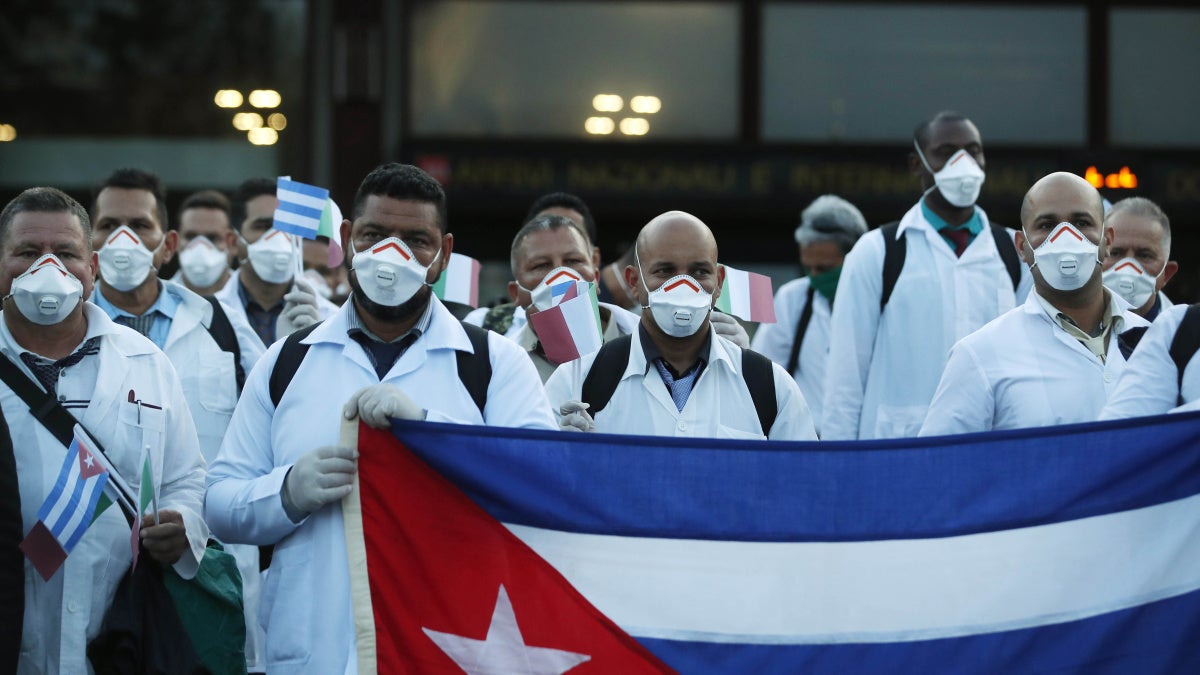
Cuba: Repressive Rules for Doctors Working Abroad
The Cuban government imposes draconian rules on doctors serving in medical missions that violate their fundamental rights. Governments that request assistance from Cuban health care workers should demand that Cuban authorities reform the applicable laws and regulations that violate, among other things, the rights to privacy, liberty, freedom of expression and association, and freedom of movement.
Reuters
Cuban Doctors: Health Diplomacy
Analysis of Cuba's medical missions program and its impact on Cuban foreign policy, including doctor testimonies and expert analysis.
CIDH / IACHR
IACHR Statement on Cuban Health Workers
The IACHR expresses concern for the rights of Cuban health professionals within the framework of international missions and urges guaranteeing their freedom of movement and decent working conditions.
Parlamento Europeo
European Parliament Resolution on Cuban Medical Missions
European Parliament resolution urging Cuba to guarantee the labour rights of health professionals participating in international missions.
Cuba's Global Medical Diplomacy: A Quantitative Assessment
Academic study quantifying the scope of Cuban medical missions in 164 countries between 1960 and 2020, analyzing their correlation with south-south cooperation agreements.